

Aféierung
sorbic acid vs potassium are among the most widely used preservatives in the food, beverage, pharmaceutical, cosmetic, and animal feed industries. Both are highly effective at controlling molds, yeasts, and certain spoilage microorganisms, making them valuable tools for extending shelf life and maintaining product quality.
Because these preservatives are closely related, many manufacturers, formulators, and procurement professionals often ask whether sorbic acid or potassium sorbate is the better choice for a particular application.
The answer depends on factors such as solubility, formulation requirements, processing conditions, product pH, and intended use.
This guide explains the key differences between sorbic acid and potassium sorbate, their advantages, limitations, and common industrial applications.
Wat ass Sorbinsäure?
Sorbic acid is an organic compound with the chemical formula C₆H₈O₂.
It is widely used as a preservative due to its ability to inhibit:
- Schimmelen
- Gären
- Certain spoilage microorganisms
Sorbinsäure is typically supplied as a white crystalline powder and is used in food products, beverages, cosmetics, pharmaceuticals, and animal feed formulations.
What Is Potassium Sorbate?
Potassium sorbate is the potassium salt of sorbic acid.
It is produced by reacting sorbic acid with potassium hydroxide.
Like sorbic acid, potassium sorbate provides effective antimicrobial protection against molds and yeasts.
Its primary advantage is its significantly higher water solubility, which makes it easier to use in liquid formulations.
Relationship Between Sorbic Acid and Potassium Sorbate
Sorbinsäure and potassium sorbate are chemically related.
When potassium sorbate is added to a formulation, it ultimately produces sorbic acid in solution, which performs the antimicrobial function.
For this reason, both preservatives work through essentially the same preservation mechanism.
The main differences involve handling characteristics and formulation performance.
Sorbic Acid vs Potassium Sorbate: Quick Comparison
| Feature | Sorbinsäure | Kaliumsorbat |
|---|---|---|
| Chemical Form | Acid | Potassium Salt |
| Water Solubility | Lower | Higher |
| Food Applications | Extensive | Extensive |
| Beverage Applications | Limited in some systems | Very common |
| Handling | Powder | Powder/Granular |
| Preservation Mechanism | Antimicrobial | Antimicrobial |
| Mold Control | Excellent | Excellent |
| Yeast Inhibition | Excellent | Excellent |
Solubility Differences
One of the most important distinctions is water solubility.
Sorbinsäure
Sorbic acid has relatively low water solubility.
This can make incorporation more challenging in certain liquid formulations.
Kaliumsorbat
Potassium sorbate dissolves much more readily in water.
As a result, manufacturers frequently choose potassium sorbate for:
- Beverages
- Liquid foods
- Syrups
- Water-based cosmetic products
This is often the deciding factor when selecting between the two preservatives.
Preservation Performance
Both preservatives provide excellent protection against:
- Mold growth
- Yeast growth
- Certain spoilage organisms
In properly formulated systems, preservation performance is generally comparable.
The effectiveness of both depends heavily on:
- Product pH
- Water activity
- Processing conditions
- Storage environment
Performance in Food Applications
Sorbic Acid Applications
Common uses include:
- Bäckereiprodukter
- Kéis
- Vervollstännegte Liewensmëttel
- Animal feed
- Specialty food products
Potassium Sorbate Applications
Common uses include:
- Beverages
- Mëllechprodukter
- Soossen
- Zousätz
- Liquid formulations
Many manufacturers select the preservative based on processing requirements rather than antimicrobial performance.
Sorbinsäure a Bäckereiprodukter
Bakery manufacturers frequently use sorbic acid because of its effectiveness against mold growth.
Uwendungen enthalen:
- Brout
- Taarten
- Tortillas
- Gebäck
Virdeeler enthalen:
- Verlängert Haltbarkeet
- Reduced spoilage
- Verbesserte Verdeelbarkeet
Potassium Sorbate in Beverage Manufacturing
Potassium sorbate is especially popular in beverage production.
Uwendungen enthalen:
- Fruit beverages
- Flavored drinks
- Syrups
- Beverage concentrates
Its high solubility allows for easier incorporation into liquid systems.
Use in Dairy Products
Both preservatives may be used in dairy processing.
Uwendungen enthalen:
- Kéis
- Joghurt
- Mëllechdessertë
The choice often depends on formulation requirements and manufacturing preferences.
Cosmetic and Personal Care Applications
Both ingredients are used in cosmetics and personal care formulations.
Common products include:
- Crèmen
- Lotionë
- Hautpfleegprodukter
- Formuléierungen fir perséinlech Fleeg
Water-based systems frequently favor potassium sorbate due to its improved solubility.
Pharmaceutical Applications
Pharmaceutical manufacturers may use either preservative depending on product design and formulation characteristics.
Selection criteria often include:
- Solubility requirements
- Product stability
- Manufacturing processes
- Regulatory considerations
Advantages of Sorbic Acid
Strong Preservation Performance
Excellent mold and yeast inhibition.
Käschteeffizienz
Can provide effective preservation at relatively low usage levels.
Wide Industry Acceptance
Used globally across numerous industries.
Suitable for Dry Applications
Particularly useful in various solid and semi-solid products.
Advantages of Potassium Sorbate
High Water Solubility
Easier incorporation into liquid formulations.
Formulation Flexibility
Suitable for a wide range of products.
Ease of Processing
Often simplifies manufacturing operations.
Broad Regulatory Acceptance
Widely approved for use in food and industrial products.
Factors to Consider When Choosing
Manufacturers should evaluate several factors.
Product Type
Dry products may favor sorbic acid.
Liquid products often favor potassium sorbate.
Solubility Requirements
Products requiring rapid dissolution typically benefit from potassium sorbate.
Processing Conditions
Manufacturing methods can influence preservative selection.
Cost Considerations
Pricing and availability may affect purchasing decisions.
Regulatory Requirements
Local regulations should always be reviewed.
Safety and Regulatory Status
Both sorbic acid and potassium sorbate are widely accepted by food safety authorities when used according to applicable regulations. sorbic acid vs potassium
Manufacturers should verify:
- Permitted usage levels
- Labeling requirements
- Regional compliance standards
Proper compliance supports food safety and market access.
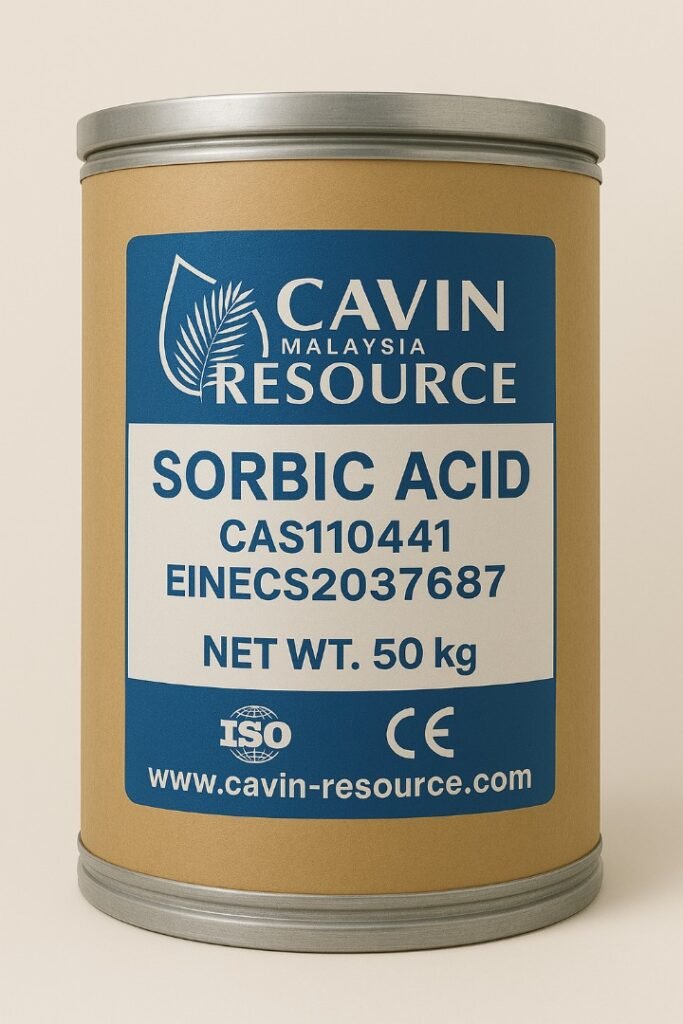
How Buyers Source Sorbic Acid and Potassium Sorbate
When selecting suppliers, procurement teams typically review:
Produktqualitéit
Ufro:
- COA
- TDS
- SDS
Regulatory Documentation
Verify food-grade suitability and certifications.
Versuergungszuverlässegkeet
Evaluate:
- Manufacturing capacity
- Lagerverfügbarkeet
- Export-Erfarung
Technesch Ënnerstëtzung
Reliable suppliers can assist with formulation and application requirements. sorbic acid vs potassium
Dacks gestallte Froen
Is potassium sorbate the same as sorbic acid?
No. Potassium sorbate is the kalium salt of sorbic acid, although both provide similar preservation functions. sorbic acid vs potassium
Which preservative is better?
Neither is universally better. The choice depends on formulation requirements, especially solubility needs. sorbic acid vs potassium
Why is potassium sorbate used in beverages?
Its high water solubility makes it easier to incorporate into liquid products.
Does sorbic acid work differently?
Both preservatives use similar antimicrobial mechanisms, but they differ in handling and formulation characteristics.
Can both be used in food products?
Yes. Both are widely used food preservatives across many applications. sorbic acid vs potassium
Konklusioun
Sorbinsäure and potassium sorbate are closely related preservatives that provide highly effective protection against molds and yeasts. While their antimicrobial performance is similar, important differences in water solubility, formulation flexibility, and processing characteristics influence which preservative is most suitable for a specific application. potassium sorbate supplier
For dry food systems and many solid products, sorbic acid remains a highly effective choice. For beverages and water-based formulations, potassium sorbate is often preferred due to its superior solubility. Understanding these differences allows manufacturers and buyers to select the most appropriate preservative for their products while maintaining quality, stability, and shelf life. potassium sorbate vs sorbic acid
 English
 Français
 Português
 Deutsch (Sie)
 Español
 Türkçe
 简体中文
简体中文 Nederlands
 Svenska
 Tiếng Việt
 Afrikaans
 Čeština
 Bahasa Indonesia
 Irish
Irish Suomi
Suomi עִבְרִית
 Luxembourgish
 Latin
Latin Bahasa Melayu
 فارسی
فارسی Norsk bokmål
 ไทย
ไทย Cymraeg
 Italiano
0 Kommentaren