

Introduction
Sorbic acid is one of the most widely used food preservatives in the world, valued for its ability to inhibit the growth of molds, yeasts, and certain bacteria. It plays a critical role in extending shelf life, maintaining product quality, and supporting food safety across a wide range of industries.
In addition to food preservation, sorbic acid is used in beverages, dairy products, baked goods, animal feed, pharmaceuticals, and cosmetic formulations. Its effectiveness, safety profile, and regulatory acceptance have made it a preferred preservative for manufacturers worldwide.
This guide explores what sorbic acid is, how it works, its key properties, major applications, benefits, and considerations for sourcing and industrial use.
What Is Sorbic Acid?
Sorbic acid is an organic compound with the chemical formula:
C₆H₈O₂
It is a naturally occurring unsaturated fatty acid first isolated from the berries of the mountain ash tree (Sorbus aucuparia), from which its name is derived.
Today, commercial sorbic acid is produced through industrial manufacturing processes to ensure consistent quality and purity for food, pharmaceutical, and industrial applications.
Sorbic acid appears as a white crystalline powder and is known for its strong antimicrobial properties, particularly against molds and yeasts.
Key Properties of Sorbic Acid
Several characteristics contribute to the widespread use of sorbic acid.
Effective Antimicrobial Action
Sorbic acid inhibits the growth of:
- Molds
- Yeasts
- Certain bacteria
This helps prevent spoilage and extends product shelf life.
Mild Sensory Impact
Unlike some preservatives, sorbic acid has minimal impact on:
- Flavor
- Aroma
- Apparence
when used at recommended concentrations.
Stability
Sorbic acid remains effective under a wide range of storage conditions and processing environments.
Regulatory Acceptance
Food safety authorities in many countries permit the use of sorbic acid within established limits for specific applications.
How Sorbic Acid Works
Sorbic acid acts by interfering with the metabolic processes of microorganisms.
When microorganisms such as mold and yeast encounter sorbic acid, their ability to reproduce and generate energy is disrupted.
As a result:
- Microbial growth slows
- Spoilage is delayed
- Product shelf life is extended
Its effectiveness is generally strongest in acidic and moderately acidic environments, making it especially useful in many food and beverage products.
Benefits of Sorbic Acid
Manufacturers choose sorbic acid for several reasons.
Extended Shelf Life
One of the primary benefits is its ability to keep products stable for longer periods.
Improved Product Safety
Reducing microbial growth helps maintain product quality and safety.
Cost Efficiency
Because relatively small amounts can provide effective preservation, sorbic acid is often a cost-effective solution.
Broad Industry Acceptance
It is widely recognized and used across global food and industrial markets.
Compatibility with Various Formulations
Sorbic acid can be incorporated into numerous product types without significantly altering product characteristics.
Sorbic Acid Uses in Food Preservation
Food preservation remains the largest application for sorbic acid worldwide.
It is commonly used in:
- Produits de boulangerie
- Dairy products
- Cheese
- Yogurt
- Processed foods
- Fruit products
- Confectionery
- Sauces
- Dressings
By preventing mold and yeast growth, sorbic acid helps maintain freshness and quality throughout distribution and storage.
Sorbic Acid in Bakery Products
The bakery industry relies heavily on preservatives to prevent spoilage and maintain product quality.
Common applications include:
- Bread
- Cakes
- Tortillas
- Pastries
- Sweet baked goods
Benefits for Bakeries
- Extended shelf life
- Reduced product waste
- Improved distribution flexibility
- Consistent product quality
For products with longer supply chains, sorbic acid can play an essential role in maintaining freshness.
Sorbic Acid in Dairy Products
Dairy products are particularly susceptible to spoilage due to their moisture content and nutrient composition.
Sorbic acid is used in:
- Cheese
- Yogurt
- Cream-based products
- Dairy desserts
Avantages
- Inhibits mold growth
- Extends shelf life
- Maintains product quality
- Supports food safety objectives
Sorbic Acid in Beverages
Many beverage manufacturers use sorbic acid to protect products from microbial spoilage.
Les applications comprennent :
- Fruit drinks
- Flavored beverages
- Concentrates
- Specialty beverage formulations
Because spoilage can affect both product quality and brand reputation, preservatives remain an important component of beverage manufacturing.
Sorbic Acid in Animal Feed
Animal feed producers often use sorbic acid to improve product stability during storage and transportation.
Benefits include:
- Reduced mold growth
- Better feed quality
- Extended storage life
- Improved inventory management
Maintaining feed quality is critical for both manufacturers and livestock producers.
Sorbic Acid in Cosmetics and Personal Care Products
Beyond food applications, sorbic acid is used in cosmetic formulations to help prevent microbial contamination.
Les applications comprennent :
- Creams
- Lotions
- Skin care products
- Personal care formulations
Manufacturers use sorbic acid as part of broader preservation systems designed to maintain product stability.
Sorbic Acid in Pharmaceutical Applications
Pharmaceutical manufacturers may incorporate sorbic acid into selected formulations where microbial control is important.
Applications can include:
- Oral formulations
- Topical products
- Specialized pharmaceutical preparations
The specific use depends on formulation requirements and regulatory standards.
Sorbic Acid vs Potassium Sorbate
Sorbic acid and potassium sorbate are closely related preservatives.
Acide sorbique
- Acid form
- Lower water solubility
- Used directly in various applications
Potassium Sorbate
- Potassium salt of sorbic acid
- Higher water solubility
- Often preferred in liquid formulations
Manufacturers select between the two based on formulation requirements and processing conditions.
Sorbic Acid Specifications
Industrial buyers typically evaluate several quality parameters.
Common specifications include:
Apparence
White crystalline powder.
La pureté
Typically supplied at high purity levels suitable for food and industrial applications.
Teneur en eau
Controlled to ensure product stability and performance.
Emballage
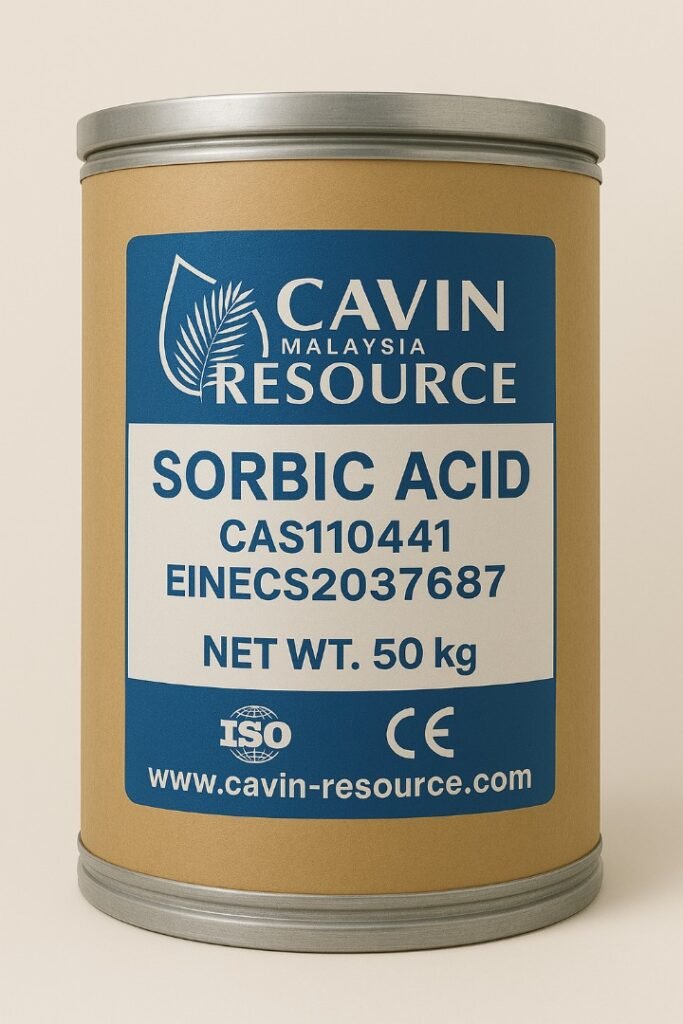
Available in:
- 25 kg bags
- Fiber drums
- Emballage industriel sur mesure
Specifications may vary depending on supplier and intended application.
Storage and Handling of Sorbic Acid
Proper storage helps maintain product quality.
Recommended practices include:
- Store in a cool, dry location
- Protect from excessive moisture
- Keep containers tightly sealed
- Avoid direct sunlight
- Follow supplier handling recommendations
Appropriate storage conditions help preserve product effectiveness throughout its shelf life.
How to Choose a Sorbic Acid Supplier
When sourcing sorbic acid, buyers should evaluate:
Product Quality
Request:
- Certificat d'analyse (COA)
- Fiche technique
- Fiche de données de sécurité (FDS)
Regulatory Compliance
Verify compliance with applicable food or industrial standards.
Supply Reliability
Consider:
- Production capacity
- Inventory availability
- Export experience
- Logistics capabilities
Technical Support
Suppliers that provide technical assistance can help buyers select the most suitable product for their applications.
Foire aux questions
What is sorbic acid used for?
Sorbic acid is primarily used as a preservative in food, beverages, dairy products, animal feed, cosmetics, and pharmaceutical formulations.
Is sorbic acid a food preservative?
Yes. Sorbic acid is one of the most widely used food preservatives globally.
How does sorbic acid prevent spoilage?
It inhibits the growth of molds, yeasts, and certain microorganisms that contribute to spoilage.
What is the difference between sorbic acid and potassium sorbate?
Potassium sorbate is the potassium salt of sorbic acid and generally offers greater water solubility.
Is sorbic acid used outside the food industry?
Yes. It is also used in cosmetics, pharmaceuticals, and animal feed applications.
Conclusion
Sorbic acid is a highly effective preservative that plays a vital role in maintaining product quality and extending shelf life across multiple industries. Its ability to inhibit molds and yeasts, combined with its broad regulatory acceptance and formulation flexibility, makes it one of the most widely used preservation solutions worldwide.
From food and beverage manufacturing to cosmetics, pharmaceuticals, and animal feed production, sorbic acid continues to support product stability, safety, and commercial performance. For manufacturers and procurement professionals, understanding sorbic acid’s properties, applications, and sourcing considerations is essential when selecting preservation solutions for modern production environments.
 English
 Français
 Português
 Deutsch (Sie)
 Español
 Türkçe
 简体中文
简体中文 Nederlands
 Svenska
 Tiếng Việt
 Afrikaans
 Čeština
 Bahasa Indonesia
 Irish
Irish Suomi
Suomi עִבְרִית
 Luxembourgish
 Latin
Latin Bahasa Melayu
 فارسی
فارسی Norsk bokmål
 ไทย
ไทย Cymraeg
 Italiano
0 commentaires