

Giới thiệu
How Sorbic Acid Works .Food manufacturers face constant challenges in maintaining product quality, ensuring food safety, and extending shelf life. Microbial spoilage caused by molds, yeasts, and certain bacteria can significantly reduce product stability and lead to economic losses throughout the supply chain.
Among the many preservatives used in food processing, sorbic acid has become one of the most trusted and effective options. Its ability to inhibit spoilage microorganisms while having minimal impact on flavor and appearance has made it a preferred preservative in bakery products, dairy foods, beverages, sauces, and other processed foods.
Understanding how sorbic acid works as a food preservative can help manufacturers, food technologists, procurement professionals, and quality control teams make informed decisions about formulation and product protection.
What Is Sorbic Acid?
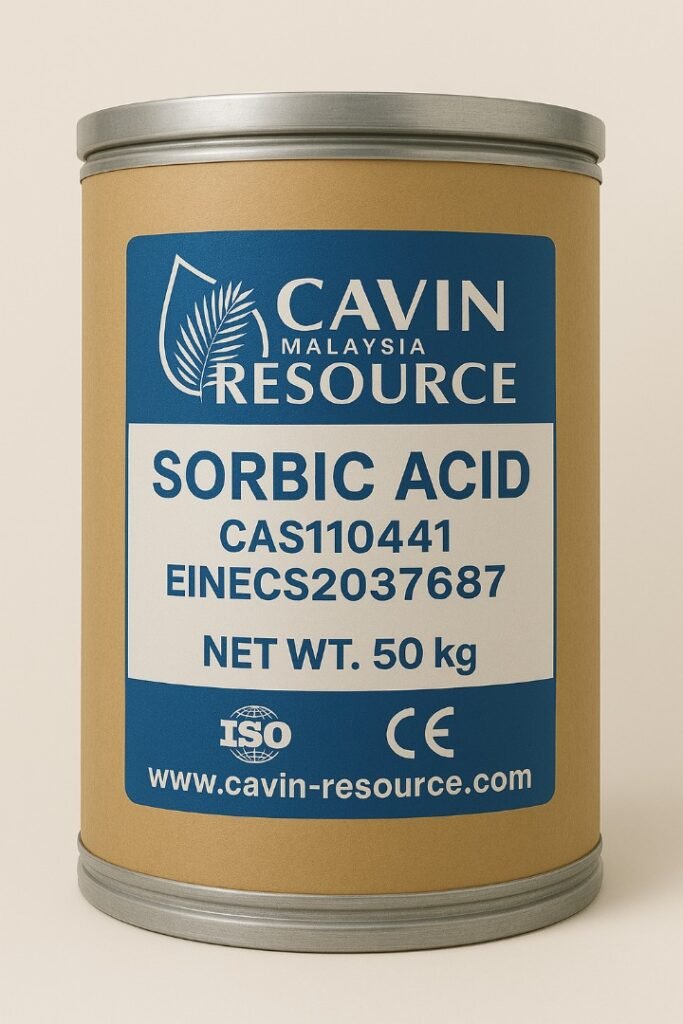
Sorbic acid is an organic compound with the chemical formula C₆H₈O₂. It is widely used as a preservative due to its ability to control the growth of microorganisms that contribute to food spoilage.
Commercially, sorbic acid is produced in high-purity form and supplied for use in food, beverage, pharmaceutical, cosmetic, and animal feed applications.
Its primary role in food products is to extend shelf life by preventing microbial growth.
Why Food Products Spoil
Food spoilage occurs when microorganisms multiply within a product.
Common spoilage organisms include:
- Molds
- Yeasts
- Certain bacteria
These microorganisms can cause:
- Visible mold growth
- Unpleasant odors
- Texture changes
- Flavor deterioration
- Reduced product safety
Without effective preservation systems, many food products would have significantly shorter shelf lives.
The Preservative Function of Sorbic Acid
Sorbic acid acts as an antimicrobial preservative.
Rather than killing all microorganisms instantly, it primarily inhibits their ability to grow and reproduce.
This helps slow spoilage and maintain product quality for longer periods.
Its effectiveness is particularly strong against:
- Molds
- Yeasts
- Certain spoilage microorganisms
This makes it especially valuable in products where fungal spoilage is a primary concern.
How Sorbic Acid Works
Step 1: Penetration of Microbial Cells
When microorganisms encounter sorbic acid, the preservative can penetrate cell membranes.
This interaction allows sorbic acid to enter microbial cells and interfere with essential biological processes.
Step 2: Disruption of Enzyme Activity
Inside the cell, sorbic acid affects enzyme systems that microorganisms require for growth and metabolism.
These enzymes play important roles in:
- Energy production
- Nutrient utilization
- Cellular reproduction
When these processes are disrupted, microbial growth slows significantly.
Step 3: Inhibition of Reproduction
As metabolic functions become impaired, molds and yeasts lose their ability to reproduce efficiently.
This reduces microbial populations and delays spoilage.
Step 4: Shelf-Life Extension
By controlling microbial growth, sorbic acid helps preserve:
- Chất lượng sản phẩm
- Flavor
- Hình thức
- Texture
- Stability
This ultimately extends shelf life and improves product performance throughout distribution and storage.
Why Sorbic Acid Is Effective Against Mold and Yeast
One of the main reasons sorbic acid is widely used is its exceptional performance against fungal organisms.
Mold Control
Molds are among the most common causes of food spoilage.
Sorbic acid helps:
- Prevent mold growth
- Delay visible spoilage
- Protect packaged foods
Yeast Inhibition
Yeasts can cause unwanted fermentation and product deterioration.
Sorbic acid reduces the likelihood of:
- Gas production
- Off-flavors
- Product instability
This is particularly important in beverages and high-moisture foods.
The Importance of pH
The effectiveness of sorbic acid depends heavily on product pH.
Best Performance in Acidic Foods
Sorbic acid performs most effectively in:
- Acidic foods
- Moderately acidic foods
- Many beverage systems
Examples include:
- Fruit products
- Beverages
- Sauces
- Certain dairy products
Why pH Matters
At lower pH levels, a larger proportion of sorbic acid remains in its active form, improving its ability to inhibit microorganisms.
Food formulators often consider pH when selecting preservative systems.
Food Applications Where Sorbic Acid Works Best
Bakery Products
Các ứng dụng phổ biến bao gồm:
- Bread
- Cakes
- Tortillas
- Muffins
- Pastries
Benefits include mold control and longer shelf life.
Sản phẩm sữa
Used in:
- Cheese
- Yogurt
- Dairy desserts
Helps maintain product stability and reduce spoilage.
Beverages
Applied in:
- Fruit drinks
- Flavored beverages
- Concentrates
Provides protection against yeast-related spoilage.
Sauces and Dressings
Sorbic acid helps preserve quality throughout storage and distribution. sorbic acid preservative
Advantages of Sorbic Acid as a Food Preservative
Broad Effectiveness
Works against multiple spoilage organisms.
Minimal Flavor Impact
Does not significantly alter taste when used appropriately.
Cost Efficiency
Low usage levels can provide substantial preservation benefits.
Regulatory Acceptance
Widely approved for food use in many countries.
Versatility
Suitable for numerous food categories and formulations. sorbic acid mechanism of action
Factors That Affect Sorbic Acid Performance
Several variables influence effectiveness.
Product pH
Lower pH generally improves performance.
Water Activity
Moisture levels affect microbial growth patterns.
Processing Conditions
Heat treatment and manufacturing methods can influence preservative systems.
Đóng gói
Appropriate packaging complements preservative performance. sorbic acid mechanism of action
Storage Conditions
Temperature and humidity affect overall shelf life.
Sorbic Acid vs Potassium Sorbate
Sorbic acid and potassium sorbate are closely related preservatives.
Sorbic Acid
- Acid form
- Lower water solubility
- Commonly used in various food products
Potassium Sorbate
- Potassium salt of sorbic acid
- Greater water solubility
- Often preferred for liquid formulations
Both function through similar antimicrobial mechanisms.
Safety and Regulatory Considerations
Food manufacturers must ensure preservatives are used according to applicable regulations.
Important considerations include:
- Maximum permitted levels
- Product-specific requirements
- Labeling standards
- Regional regulatory guidelines
Compliance helps maintain product safety and market access.
Why Manufacturers Choose Sorbic Acid
Food producers continue using sorbic acid because it offers an effective balance between preservation performance and formulation flexibility.
Key reasons include:
- Reliable mold control
- Strong yeast inhibition
- Broad application range
- Cost-effective use rates
- Proven industry performance
These advantages make sorbic acid one of the most widely used food preservatives globally.
Các câu hỏi thường gặp
How does sorbic acid preserve food?
Sorbic acid inhibits the growth and reproduction of molds, yeasts, and certain microorganisms that cause spoilage.
Is sorbic acid effective against bacteria?
It is most effective against molds and yeasts, though it may also affect certain bacterial species.
Why does pH affect sorbic acid performance?
Sorbic acid is more active in acidic environments, which improves its antimicrobial effectiveness.
Which foods commonly use sorbic acid?
Bakery products, dairy foods, beverages, sauces, dressings, and processed foods commonly contain sorbic acid.
Is sorbic acid a natural preservative?
Although originally discovered in mountain ash berries, commercial sorbic acid is manufactured industrially for consistent quality and performance.
Kết luận
Sorbic acid remains one of the most effective preservatives used in modern food manufacturing. By interfering with microbial metabolism and reproduction, it helps control mold and yeast growth, extend shelf life, and maintain product quality across a wide variety of food categories.
Its effectiveness, regulatory acceptance, minimal sensory impact, and formulation versatility continue to make sorbic acid a preferred preservation solution for manufacturers worldwide. Understanding how sorbic acid works allows food producers to optimize product stability while supporting safety and quality objectives.
 English
 Français
 Português
 Deutsch (Sie)
 Español
 Türkçe
 简体中文
简体中文 Nederlands
 Svenska
 Tiếng Việt
 Afrikaans
 Čeština
 Bahasa Indonesia
 Irish
Irish Suomi
Suomi עִבְרִית
 Luxembourgish
 Latin
Latin Bahasa Melayu
 فارسی
فارسی Norsk bokmål
 ไทย
ไทย Cymraeg
 Italiano
0 Lời bình