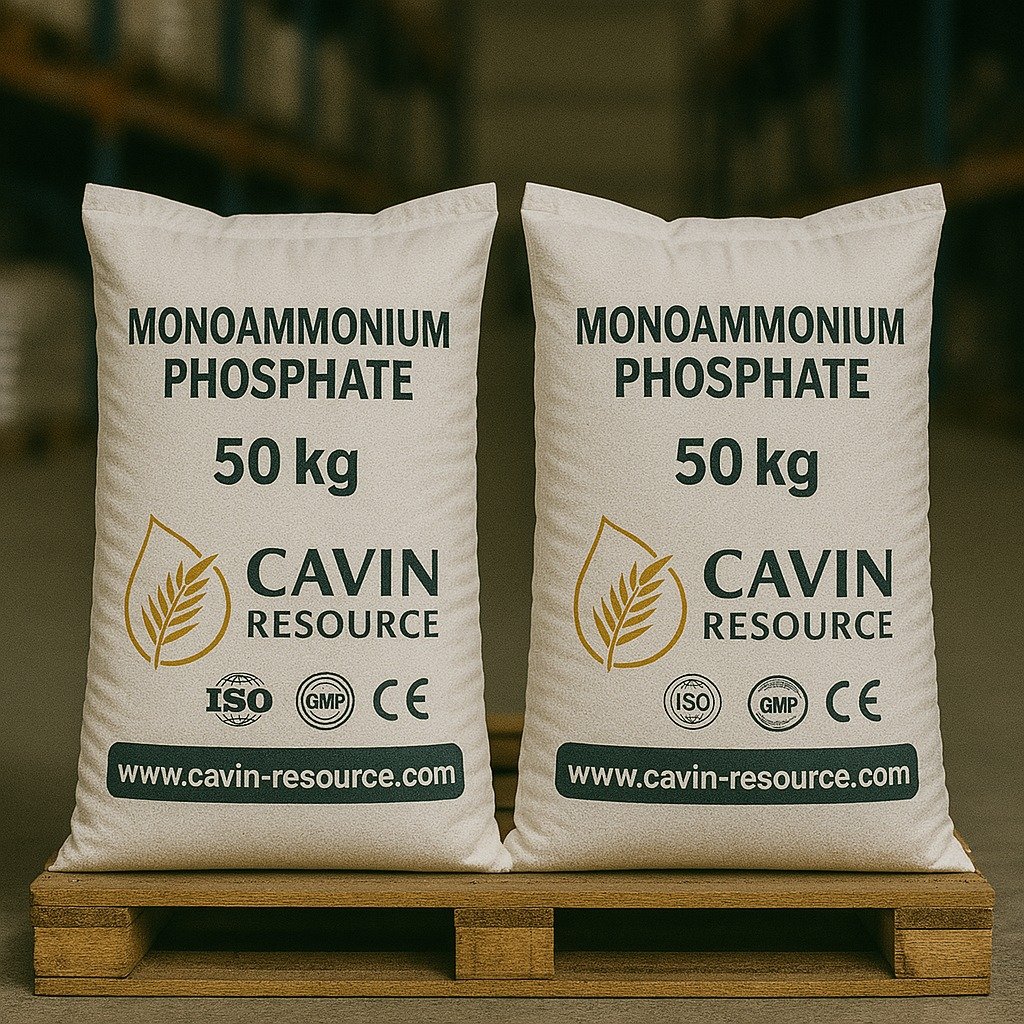
Fosfato monoamónico (MAP 11-52-0) - Fertilizante de arranque com elevado teor de fósforo
O preço original era: $450.00.$400.00O preço atual é: $400.00.
Bulk Supplier of Monoammonium Phosphate (MAP 11-52-0) is a premium-quality, water-soluble fertilizer ideal for early plant development. Contains 11% nitrogen and 52% phosphorus (P₂O₅), perfect for seed germination and root formation. Bulk export available from Cavin Resource. Monoammonium phosphate map 11 52 0 price per ton
Monoammonium phosphate map 11 52 0 preço
Monoammonium Phosphate (MAP) é um highly efficient source of phosphorus and nitrogen, specially formulated for early crop establishment. With a nutrient ratio of 11-52-0, MAP is a key component in starter fertilizers for cereals, legumes, fruits, and vegetables.
MAP has a low nitrogen content in ammonium form (NH₄⁺), which helps stabilize phosphorus in the root zone and minimizes leaching. Its high phosphorus concentration boosts seedling vigor, flowering, e early root expansion — critical for high-yield farming.
Em Recurso Cavin, fornecemos granular MAP produced under ISO-certified processes, ready for global shipment with full export documentation. Our MAP is compatible with most fertilizers and blends easily into NPK formulations. monoammonium phosphate bulk for sale
⚙️ Método de produção
Reaction of Ammonia with Phosphoric Acid
MAP is manufactured by the direct reaction of ammonia (NH₃) with phosphoric acid (H₃PO₄).
The product crystallizes as (NH₄)H₂PO₄, forming free-flowing granules upon cooling.
The final fertilizer is low in heavy metals and has a neutral to slightly acidic pH.
🏭 Casos de utilização por sector
🌾 Agricultural Use
Starter fertilizer for maize, wheat, soybean, rice, and pulses
Utilizado em row and band application, especialmente em acidic soils
Effective for transplant crops, greenhouse farming, and vegetable gardens
🧪 Industrial Use
Utilizado em fireproofing compounds e fire extinguishing powders
Component in yeast and fermentation nutrient mixes
Base for NPK compound production
✅ Benefits of Monoammonium Phosphate (MAP)
🌱 High Phosphorus Concentration: 52% P₂O₅ fully water-soluble for immediate availability
⚖️ Acidic pH Improves Nutrient Uptake: Especially effective in neutral to alkaline soils
🚜 Excellent Starter Fertilizer: Promotes early growth and root expansion
🔄 Easily Blendable: Compatible with most fertilizers and NPK programs
📦 Non-Hygroscopic Granules: Easy to store and apply in all climates
🌍 Sustainable Performance: Improves fertilizer use efficiency and crop uniformity
📦 Opções de embalagem
25kg and 50kg woven polypropylene bags with liner
1000kg FIBC jumbo bags for export
Export-grade palletizing and stretch-wrapping
MSDS, COA, and SGS third-party inspection available map fertilizer diammonium phosphate
❓ Perguntas frequentes (FAQs)
1. What makes MAP better than DAP in some soils?
Resposta:
MAP has a lower nitrogen content and an acidic pH, tornando-o ideal para alkaline soils. DAP is more alkaline and may cause ammonium volatilization in high-pH conditions.
2. How should MAP be applied?
Resposta:
Apply directly to the soil at planting or as a banded starter fertilizer. It can also be blended into dry NPK mixes ou applied through fertigation in soluble form.
3. Is MAP safe for young seedlings?
Resposta:
Yes. MAP’s low salt index makes it safer for direct root-zone applications, even for sensitive crops and young plants.
4. Does Cavin Resource ship internationally?
Resposta:
Yes. We offer international logistics, documentation, SGS inspection, and custom packaging for global clients.
📚 Fontes e referências credíveis
Informações adicionais
| Nome do produto | Monoammonium Phosphate (MAP) |
|---|---|
| Fórmula química | NH₄H₂PO₄ |
| Número CAS | 7722-76-1 |
| Nitrogen Content | 11% (ammoniacal) |
| Phosphorus (P₂O₅) | 52% (water-soluble) |
| Solubilidade | 100% water-soluble |
| Physical Form | Granular or crystalline |
| Moisture Content | <2% |
| pH (solução 1%) | 4.5 – 5.5 |
| Embalagem | 25kg, 50kg, 1000kg jumbo bags |
| Prazo de validade | 2 years if stored dry |
| Industry Use | Agriculture, NPK production, firefighting |
| Conformidade | ISO, GHS, SGS, FAO Standards |
Produtos relacionados
-
Venda!

Metanol - Industrial, Químico e de Combustível
O preço original era: $450.00.$400.00O preço atual é: $400.00. -
Venda!
Cheddar Cheese – Aged, Bulk Supply for Foodservice & Wholesale
O preço original era: $2,600.00.$2,500.00O preço atual é: $2,500.00. -
Venda!
Sulfato de magnésio - Grau agrícola e industrial
O preço original era: $500.00.$450.00O preço atual é: $450.00. -
Venda!
Ácido metacrílico (MAA) - Monómero acrílico de elevada pureza
O preço original era: $1,900.00.$1,800.00O preço atual é: $1,800.00.



 English
 Français
 Português
 Deutsch (Sie)
 Español
 Türkçe
 简体中文
简体中文 Nederlands
 Svenska
 Tiếng Việt
 Afrikaans
 Čeština
 Bahasa Indonesia
 Irish
Irish Suomi
Suomi עִבְרִית
 Luxembourgish
 Latin
Latin Bahasa Melayu
 فارسی
فارسی Norsk bokmål
 ไทย
ไทย Cymraeg
 Italiano
Comentários
Ainda não existem comentários.