

Introduksjon
Hvordan sorbinsyre virker. Matvareprodusenter står overfor konstante utfordringer med å opprettholde produktkvalitet, sikre matrygghet og forlenge holdbarheten. Mikrobiell fordervelse forårsaket av muggsopp, gjærsopp og visse bakterier kan redusere produktets stabilitet betydelig og føre til økonomiske tap gjennom hele forsyningskjeden.
Blant de mange konserveringsmidlene som brukes i matproduksjon, har sorbinsyre blitt en av de mest pålitelige og effektive alternativene. Dens evne til å hemme fordervelsesmikroorganismer samtidig som den har minimal innvirkning på smak og utseende, har gjort den til et foretrukket konserveringsmiddel i bakervarer, meieriprodukter, drikkevarer, sauser og annen bearbeidet mat.
Å forstå hvordan sorbinsyre fungerer som et matkonserveringsmiddel kan hjelpe produsenter, matteknologer, innkjøpsfagfolk og kvalitetskontrollteam med å ta informerte beslutninger om formulering og produktbeskyttelse.
Hva er sorbinsyre?
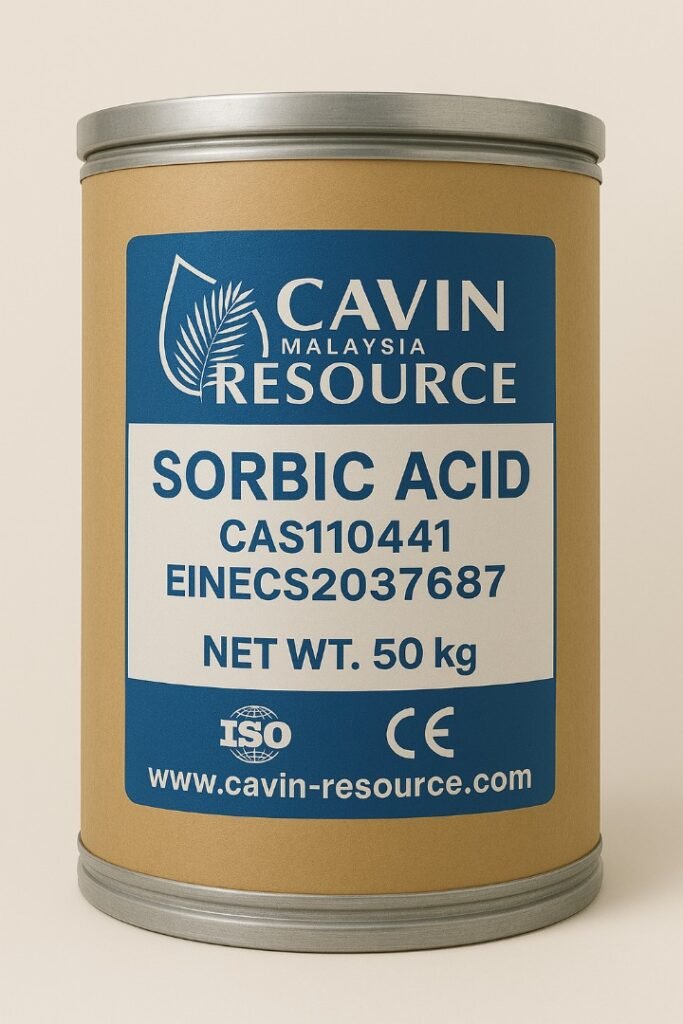
Sorbinsyreer en organisk forbindelse med den kjemiske formelen C₆H₈O₂. Den er mye brukt som konserveringsmiddel på grunn av dens evne til å kontrollere veksten av mikroorganismer som bidrar til matraz.
Kommersielt produseres sorbinsyre i høyrenhetsform og leveres for bruk i næringsmidler, drikkevarer, legemidler, kosmetikk og dyrefôr.
Den primære rollen i matvarer er å forlenge holdbarheten ved å forhindre mikrobiell vekst.
Hvorfor matvarer blir ødelagt
Matfordervelse oppstår når mikroorganismer mulitipliserer seg i et produkt.
Vanlige fordervelsesorganismer inkluderer:
- Former
- Gjærsopper
- Visse bakterier
Disse mikroorganismene kan forårsake:
- Synlig muggvekst
- Ubehagelig lukt
- Teksturendringer
- Smaksforringelse
- Redusert produktsikkerhet
Uten effektive konserveringssystemer ville mange matvarer hatt vesentlig kortere holdbarhet.
Konserveringsfunksjonen til sorbinsyre
Sorbinsyre virker som et antimikrobielt konserveringsmiddel.
I stedet for å drepe alle mikroorganismer umiddelbart, hemmer det først og fremst deres evne til å vokse og formere seg.
Dette bidrar til å bremse fordervelsen og opprettholde produktkvaliteten over lengre perioder.
Effektiviteten er spesielt høy mot:
- Former
- Gjærsopper
- Visse fordervelsesmikroorganismer
Dette gjør den spesielt verdifull i produkter hvor soppvekst er en vesentlig bekymring.
Hvordan sorbinsyre virker
Trinn 1: Penetrasjon av mikrobielle celler
Når mikroorganismer kommer i kontakt med sorbinsyre, kan konserveringsmiddelet trenge gjennom cellemembraner.
Denne interaksjonen gjør det mulig for sorbinsyre å trenge inn i mikrobielle celler og forstyrre essensielle biologiske prosesser.
Trinn 2: Forstyrrelse av enzymaktivitet
Inne i cellen virker sorbinsyre inn på enzymer som mikroorganismer trenger for vekst og stoffskifte.
Disse enzymene spiller en viktig rolle i:
- Energiproduksjon
- Næringsstoffutnyttelse
- Celledeling
Når disse prosessene blir forstyrret, avtar den mikrobielle veksten betydelig.
Trinn 3: Hemming av reproduksjon
Ettersom de metabolske funksjonene svekkes, mister muggsopp og gjærsopp evnen til å formere seg effektivt.
Dette reduserer mikrobielle populasjoner og forsinker fordervelse.
Trinn 4: Forlengelse av holdbarhetstid
Ved å kontrollere mikrobiell vekst bidrar sorbinsyre til å bevare:
- Produktkvalitet
- Smak
- Utseende
- Tekstur
- Stabilitet
Dette forlenger til syvende og sist holdbarheten og forbedrer produktets ytelse gjennom distribusjon og lagring.
Derfor er sorbinsyre effektiv mot mugg og gjær
En av hovedårsakene til at sorbinsyre er mye brukt, er dens enestående virkning mot sopporganismer.
Muggsoppkontroll
Muggsopp er blant de vanligste årsakene til matforringelse.
Sorbinsyrehjelp
- Forebygg muggvekst
- Forsink synlig fordervelse
- Beskytt pakket mat
Gjærhemming
Gjærsopp kan forårsake uønsket gjæring og produktforringelse.
Sorbinsyre reduserer sannsynligheten for:
- Gassproduksjon
- Bismak
- Produktustabilitet
Dette er spesielt viktig i drikkevarer og matvarer med høyt fuktighetsinnhold.
Betydningen av pH
Effektiviteten til sorbinsyre avhenger i stor grad av produktets pH-verdi.
Beste ytelse i sur mat
Sorbinsyre fungerer mest effektivt i:
- Sur mat
- Moderat sure matvarer
- Mange drikkesystemer
Eksempler inkluderer:
- Fruktprodukter
- Drikkevarer
- Sauser
- Visse meieriprodukter
Hvorfor pH betyr noe
Ved lavere pH-verdier forbblir en større part av sorbinsyren i sin aktive form, noe som forbedrer dens evne til å hemme mikroorganismer.
Matvareformulerende forskere tar ofte hensyn til pH når de velger konserveringssystemer.
Matapplikasjoner der sorbinsyre fungerer best
Bakervarer
Vanlige bruksområder inkluderer:
- Brød
- Kaker
- Tortillas
- Muffins
- Bakverk
Fordeler inkluderer muggkontroll og lengre holdbarhet.
Meieri produkter
Brukes i:
- Ost
- Yoghurt
- Meieri-desserter
Bidrar til å opprettholde produktstabiliteten og redusere svinn.
Drikkevarer
Brukes i:
- Fruktdrikker
- Smaksatte drikker
- Konsentrater
Gir beskyttelse mot gjærrelatert fordervelse.
Sauser og dressinger
Sorbinsyre bidrar til å bevare kvaliteten gjennom lagring og distribusjon. sorbinsyre som konserveringsmiddel
Fordeler med sorbinsyre som matkonserveringsmiddel
Bred effektivitet
Virker mot flere fordervelsesorganismer.
Minimal smakseffekt
Endrer ikke smaken nevneverdig når det brukes riktig.
Kostnadseffektivitet
Lavt bruksnivå kan gi vesentlige bevaringsfordeler.
Regulatorisk godkjenning
Godkjent for matbruk i mange land.
Allsidighet
Egnet for en rekke matvarekategorier og formuleringer. virkningsmekanisme for sorbinsyre
Faktorer som påvirker sorbinsyres ytelse
Flere variabler påvirker effektiviteten.
Produktets pH-verdi
Lavere pH forbedrer generelt ytelsen.
Vannaktivitet
Fuktighetsnivåer påvirker vekstmønstrene til mikrober.
Behandlingsbetingelser
Varmebehandling og produksjonsmetoder kan påvirke konserveringsmidlene.
Emballasje
Egnet emballasje utfyller konserveringsmidlets funksjon. Sorbinsyrens virkningsmekanisme
Lagringsbetingelser
Temperatur og luftfuktighet påvirker den generelle holdbarheten.
Sorbinsyre vs. kaliumsorbat
Sorbinsyre og kaliumsorbat er nært beslektede konserveringsmidler.
Sorbinsyre
- Syreform
- Lavere vannoppløselighet
- Vanlig brukt i ulike matvarer
Kaliumsorbat
- Kaliumsalt av sorbinsyre
- Større vannløselighet
- Ofte foretrukket for flytende formuleringer
Begge fungerer gjennom lignende antimikrobielle mekanismer.
Sikkerhetshensyn og reguleringer
Matvareprodusenter må sørge for at konserveringsmidler brukes i henhold til gjeldende regelverk.
Viktige hensyn inkluderer:
- Maksimalt tillatte nivåer
- Produktspesifikke krav
- Merkestandarder
- Regionale retningslinjer for regulering
Etterlevelse bidrar til å opprettholde produktsikkerhet og markedsadgang.
Hvorfor produsenter velger sorbinsyre
Matprodusenter fortsetter å bruke sorbinsyre fordi den gir en effektiv balanse mellom konserveringsevne og formuleringsfleksibilitet.
Viktige årsaker er blant annet:
- Pålitelig muggkontroll
- Sterk gjærhemming
- Bredt bruksområde
- Kostnadseffektive bruksrater
- Dokumentert bransjeytelse
Disse ford一项mene sorbinsyre til ett av de mest brukte matkonserveringsmidlene i verden.
Ofte stilte spørsmål
Hvordan konserverer sorbinsyre mat?
Sorbinsyre hemmer vekst og reproduksjon av muggsopp, gjærsopp og visse mikroorganismer som forårsaker fordervelse.
Er sorbinsyre effektiv mot bakterier?
Den er mest effektiv mot muggsopp og gjærsopp, selv om den også kan virke på visse bakteriearter.
Hvorfor påvirker pH effekten av sorbinsyre?
Sorbinsyre er mer aktiv i sure miljøer, noe som forbedrer dens antimikrobielle effekt.
Hvilke matvarer inneholder vanligvis sorbinsyre?
Bakervarer, meieriprodukter, drikkevarer, sauser, dressinger og bearbeidet mat inneholder ofte sorbinsyre.
Er sorbinsyre et naturlig konserveringsmiddel?
Selv om sorbinsyre opprinnelig ble oppdaget i rognebær, blir kommersiell sorbinsyre fremstilt industrielt for å sikre jevn kvalitet og ytelse.
Konklusjon
Sorbinsyre forblir et av de mest effektive konserveringsmidlene som brukes i moderne matproduksjon. Ved å forstyrre mikrobiell metabolisme og reproduksjon, bidrar det til å kontrollere vekst av mugg og gjær, forlenge holdbarheten og opprettholde produktkvaliteten på tvers av et bredt spekter av matvarekategorier.
Effektiviteten, den regulatoriske godkjennelsen, den minimale sensoriske påvirkningen og formuleringsfleksibiliteten gjør at sorbinsyre fortsatt er en foretrukket konserveringsløsning for produsenter over hele verden. Å forstå hvordan sorbinsyre virker, gjør det mulig for matvareprodusenter å optimere produktstabiliteten samtidig som de støtter målene for sikkerhet og kvalitet.
 English
 Français
 Português
 Deutsch (Sie)
 Español
 Türkçe
 简体中文
简体中文 Nederlands
 Svenska
 Tiếng Việt
 Afrikaans
 Čeština
 Bahasa Indonesia
 Irish
Irish Suomi
Suomi עִבְרִית
 Luxembourgish
 Latin
Latin Bahasa Melayu
 فارسی
فارسی Norsk bokmål
 ไทย
ไทย Cymraeg
 Italiano
0 kommentarer