

📚 Bahagian Pusat Pengetahuan Merkuri Sumber Cavin
Selamat datang ke Pusat Pengetahuan Merkuri Sumber Cavin—koleksi penerbitan teknikal yang semakin berkembang yang dicipta untuk profesional perolehan, pengurus makmal, pembeli industri, penyelidik, pasukan jaminan kualiti, dan pengilang di seluruh dunia.
Setiap Penerbitan Hidup menyediakan panduan teknikal terkini, wawasan pasaran, sumber perolehan, and amalan terbaik industri yang berkaitan dengan merkuri suria (Hg). Sama ada anda sedang menyelidik spesifikasi merkuri, membandingkan gred ketulenan, menilai pembekal, memahami harga, atau menyemak dokumentasi teknikal, matlamat kami adalah untuk menyediakan maklumat yang boleh dipercayai yang menyokong keputusan pembelian dan operasi yang maklum.
Spesifikasi Merkuri: Panduan Lengkap kepada Ketulenan, Sifat Teknikal & Piawaian Kualiti
✅ Jawapan Pantas
Spesifikasi Mercury ialah ciri-ciri teknikal, kimia, fizikal, and kualiti yang digunakan untuk mentakrifkan komposisi dan prestasi merkuri unsur (Hg). Spesifikasi ini membantu makmal, pembeli industri, pasukan perolehan, dan profesional jaminan kualiti menentukan sama ada sesuatu produk merkuri memenuhi keperluan aplikasi tertentu.
Spesifikasi merkuri yang biasa merangkumi:
- ✔️ Gred ketulenan (Teknikal, Perindustrian, Makmal, Gred Penyelidikan, atau Ketulenan Tinggi)
- ✔️ Pengenalan bahan kimia (Hg, No. CAS 7439-97-6, UN2809)
- ✔️ Sifat fizikal seperti ketumpatan, takat lebur, dan takat didih
- ✔️ Had kekotoran surih dan keperluan kualiti
- ✔️ Sijil Analisis (COA)
- ✔️ Helaian Data Teknikal (TDS)
- ✔️ Risalah Data Keselamatan (SDS)
- ✔️ Pembungkusan, penyimpanan, pengangkutan, dan dokumentasi pengawalseliaan
Memahami spesifikasi ini membolehkan pembeli membandingkan pembekal, mengesahkan kualiti produk, memastikan pematuhan peraturan, dan memilih merkuri yang sesuai untuk penyelidikan makmal, sistem penentukuran, aplikasi saintifik, dan proses perindustrian khusus.
🔍 Spesifikasi Merkuri Sekilas Pandang
| Hartanah | Spesifikasi |
|---|---|
| Nama Kimia | Utarid |
| Simbol Kimia | Hg |
| Nombor Atom | 80 |
| Nombor CAS | 7439-97-6 |
| Nombor PBB | UN2809 |
| Penampilan | Logam cecair perak |
| Keadaan Piawai | Cecair pada suhu bilik |
| Ketumpatan | 13.53 g/cm³ (lebih kurang 20°C) |
| Takat lebur | -38.83°C |
| Takat Didih | 356.73°C |
| Gred Ketulenan Tinggi Biasa | Sehingga 99.99% |
| Aplikasi Biasa | Penyelidikan makmal, penentukuran, instrumen analitikal, proses perindustrian khusus |
📑 Jadual Kandungan
- Pengenalan
- Memahami Spesifikasi Merkuri
- Pengenalan Kimia Merkuri
- Sifat Fizikal Merkuri
- Sifat Kimia Merkuri
- Gred Ketulenan Merkuri
- Spesifikasi Teknikal Mercury
- Piawaian Kualitas Merkuri
- Pengujian Merkuri & Analisis Makmal
- Sijil & Dokumentasi Teknikal (COA, TDS & SDS)
- Aplikasi Perindustrian & Makmal
- Spesifikasi Pembungkusan
- Keperluan Penyimpanan & Pengendalian
- Pertimbangan Pengangkutan & Kawal Selia
- Senarai Semak Perolehan Mercury
- Cara Memilih Pembekal Merkuri yang Boleh Dipercayai
- Soalan Lazim
- Sumber Merkuri Berkaitan
- Rujukan
- Kesimpulan
Pengenalan
Merkuri adalah salah satu unsur logam yang paling unik yang digunakan dalam persekitaran makmal, saintifik dan perindustrian yang khusus. Gabungan uniknya ketumpatan tinggi, keadaan cecair pada suhu bilik, pexpansion terma yang boleh diramalkan, dan kekonduksian elektrik yang cemerlang telah menjadikannya bahan penting untuk pengukuran ketepatan, penyelidikan analitikal, peralatan penentukuran, dan aplikasi industri terpilih selama beberapa dekad.
Hari ini, pembelian merkuri melibatkan lebih daripada sekadar membandingkan harga. Organisasi mesti menilai spesifikasi teknikal, gred ketulenan, dokumentasi kualiti, tahap kekotoran surih, piawaian pembungkusan, dan keperluan pengawalseliaan untuk memastikan bahan tersebut sesuai dengan aplikasi yang dimaksudkan.
Sama ada anda seorang pakar perolehan yang mendapatkan merkuri gred makmal, pengurus jaminan kualiti yang menyemak dokumentasi teknikal, atau pembeli perindustrian yang membandingkan pembekal, memahami spesifikasi merkuri adalah penting untuk membuat keputusan perolehan yang termaklum.
Penerbitan Hidup ini menyediakan gambaran keseluruhan yang komprehensif tentang spesifikasi merkuri, termasuk pengenalan kimia, sifat fizikal dan kimia, klasifikasi ketulenan, piawaian kualiti, kaedah ujian makmal, keperluan dokumentasi, amalan pembungkusan, cadangan penyimpanan, dan kriteria penilaian pembekal. Menjelang akhir panduan ini, anda akan mempunyai pemahaman yang jelas tentang cara merkuri dispesifikasikan, diuji, didokumenkan, dan dibekalkan untuk aplikasi makmal dan perindustrian khusus.
Bab 1: Memahami Spesifikasi Merkuri
Spesifikasi merkuri ialah satu set keperluan teknikal, kimia, fizikal, dan kualiti yang diseragamkan yang mentakrifkan ciri-ciri merkuri unsur (Hg). Spesifikasi ini membolehkan pengilang, makmal, profesional perolehan, dan pasukan jaminan kualiti menilai sama ada sesuatu produk merkuri itu sesuai untuk aplikasi yang dimaksudkan.
Tidak seperti penerangan produk yang ringkas, spesifikasi menyediakan maklumat yang boleh diukur tentang identiti, komposisi, ketulenan, dan prestasi bahan tersebut. Ia berfungsi sebagai penanda aras teknikal yang digunakan untuk membandingkan pembekal, mengesahkan kualiti produk, dan menyokong keputusan perolehan.
Bagi organisasi yang menjalankan penyelidikan, analisis makmal, penentukuran, spesifikasi yang tepat membantu mengurangkan risiko perolehan dengan memastikan bahan yang diterima memenuhi keperluan kualiti yang didokumenkan.
Mengapa Spesifikasi Merkuri Penting
Memilih merkuri semata-mata berdasarkan harga mungkin tidak memberikan jaminan yang mencukupi tentang kualiti atau kesesuaian produk. Spesifikasi teknikal membantu pembeli memahami dengan tepat apa yang mereka beli dan memberikan keyakinan bahawa bahan tersebut selaras dengan keperluan operasi dan peraturan.
Spesifikasi merkuri yang didokumentasikan dengan baik boleh membantu organisasi:
- ✔️ Sahkan ketulenan produk sebelum pembelian
- ✔️ Bandingkan produk dari pembekal yang berbeza
- ✔️ Sahkan keserasian dengan aplikasi makmal atau industri
- ✔️ Semak dokumentasi jaminan kualiti
- ✔️ Menyokong proses kelayakan pembekal
- ✔️ Kekalkan konsistensi antara kelompok pengeluaran
- ✔️ Tingkatkan ketepatan telus dan kebolehkesanan perolehan
Bagi makmal dan kemudahan perindustrian, spesifikasi yang didokumentasikan juga menyokong sistem pengurusan kualiti dalaman dan prosedur perolehan.
Apakah Maklumat yang Termasuk dalam Spesifikasi Merkuri?
Walaupun helaian spesifikasi mungkin berbeza antara pembekal, kebanyakan daripadanya merangkumlu set maklumat teknikal yang konsisten yang membolehkan pembeli menilai kualiti produk.
Spesifikasi merkuri biasa termasuk:
| Kategori Spesifikasi | Tujuan |
|---|---|
| Pengenalan Kimia | Mengesahkan bahan menggunakan simbol kimia, nombor CAS, dan nombor UN. |
| Gred Ketulenan | Menunjukkan kepekatan merkuri unsur dan kualiti produk secara keseluruhan. |
| Sifat Fizikal | Senaraikan ciri-ciri yang boleh diukur seperti ketumpatan, takat lebur, dan takat didih. |
| Sifat Kimia | Menjelaskan komposisi unsur dan ciri-ciri kimia yang berkaitan. |
| Had Kekotoran Surih | Mengenal pasti tahap kekotoran logam atau bukan logam yang boleh diterima jika berkenaan. |
| Dokumentasi Kualiti | Rujukan menyokong dokumen seperti Sijil Analisis (COA), Helaian Data Teknikal (TDS), dan Helaian Data Keselamatan (SDS). |
| Maklumat Pembungkusan | Menentukan jenis bekas, kaedah pengedap, dan keperluan pengangkutan. |
| Maklumat Kawal Selia | Termasuk klasifikasi pengangkutan dan keperluan dokumentasi yang berkenaan jika berkaitan. |
Secara bersama-sama, kategori spesifikasi ini menyediakan profil teknikal bahan yang menyeluruh kepada pembeli.
Spesifikasi Merkuri untuk Pelbagai Aplikasi
Tidak setiap aplikasi memerlukan tahap ketulenan atau dokumentasi yang sama. Spesifikasi yang bersesuaian bergantung pada cara merkuri itu akan digunakan dan keperluan teknikal organisasi.
Contohnya termasuk:
Penyelidikan Makmal
Makmal penyelidikan sering memerlukan merkuri ketulenan tinggi yang disokong oleh dokumentasi khusus kelompok, termasuk Sijil Analisis (COA) dan Helaian Data Teknikal (TDS), bagi memastikan konsistensi untuk kerja-kerja analitikal.
Penentukuran dan Pengukuran
Merkuri dari segi sejarah telah digunakan dalam peralatan penentukuran khusus dan pengukuran ketepatan kerana sifat fizikalnya yang stabil. Aplikasi ini mungkin memerlukan ciri fizikal yang didokumenkan dengan baik dan tahap kekotoran yang terkawal.
Peralatan Saintifik
Tertentu instrumen saintifik dan peralatan khusus mungkin memerlukan merkuri yang memenuhi spesifikasi teknikal yang ditetapkan untuk menyokong prestasi yang tepat dan kebolehpercayaan jangka panjang. Beli Merkuri Atas Talian
Aplikasi Perindustrian
Di mana peraturan membenarkan, proses perindustrian khusus mungkin memerlukan merkuri dengan piawaian kualiti yang didokumenkan, pembungkusan selamat, dan dokumentasi pengangkutan yang sewajarnya.
Faktor Utama yang Perlu Dinilai oleh Pembeli
Sebelum memilih pembekal merkuri, pasukan perolehan harus meneliti beberapa faktor teknikal dan komersial untuk menentukan sama ada produk tersebut memenuhi keperluan projek.
Kriteria penilaian yang penting termasuklah:
- Tahap ketulenan sesuai untuk aplikasi yang dimaksudkan
- Sifat fizikal dan kimia selaras dengan keperluan teknikal
- Dokumentasi jaminan kualiti, termasuk COA, TDS, dan SDS
- Integriti pembungkusan untuk menyokong pengangkutan dan penyimpanan yang selamat
- Pengalaman pembekal melayani pasaran makmal dan industri
- Pematuhan peraturan relevan dengan negara destinasi dan penggunaan yang dimaksudkan
Menilai faktor-faktor ini sebagai sebahagian daripada proses perolehan boleh meningkatkan pemilihan pembekal, menyokong prosedur jaminan kualiti, dan mengurangkan risiko menerima bahan yang tidak memenuhi keperluan operasi.
Bersedia untuk Penilaian Teknikal
Sebaik sahaja tujuan spesifikasi merkuri difahami, langkah seterusnya adalah meneliti bahan itu sendiri. Bab berikut memperkenalkan pengecam kimia standard yang digunakan di seluruh dunia—termasuk simbol kimia, nombor atom, nombor CAS, berat molekul, dan klasifikasi PBB—yang membentuk asas dokumentasi teknikal, rekod makmal, kertas kerja kastam, dan dokumentasi perolehan.
Bab 1: Memahami Spesifikasi Merkuri
Spesifikasi merkuri ialah satu set keperluan teknikal, kimia, fizikal, dan kualiti yang diseragamkan yang mentakrifkan ciri-ciri merkuri unsur (Hg). Spesifikasi ini membolehkan pengilang, makmal, profesional perolehan, dan pasukan jaminan kualiti menilai sama ada sesuatu produk merkuri itu sesuai untuk aplikasi yang dimaksudkan.
Tidak seperti penerangan produk yang ringkas, spesifikasi menyediakan maklumat yang boleh diukur tentang identiti, komposisi, ketulenan, dan prestasi bahan tersebut. Ia berfungsi sebagai penanda aras teknikal yang digunakan untuk membandingkan pembekal, mengesahkan kualiti produk, dan menyokong keputusan perolehan.
Bagi organisasi yang menjalankan penyelidikan, analisis makmal, penentukuran, spesifikasi yang tepat membantu mengurangkan risiko perolehan dengan memastikan bahan yang diterima memenuhi keperluan kualiti yang didokumenkan.
Mengapa Spesifikasi Merkuri Penting
Memilih merkuri semata-mata berdasarkan harga mungkin tidak memberikan jaminan yang mencukupi tentang kualiti atau kesesuaian produk. Spesifikasi teknikal membantu pembeli memahami dengan tepat apa yang mereka beli dan memberikan keyakinan bahawa bahan tersebut selaras dengan keperluan operasi dan peraturan.
Spesifikasi merkuri yang didokumentasikan dengan baik boleh membantu organisasi:
- ✔️ Sahkan ketulenan produk sebelum pembelian
- ✔️ Bandingkan produk dari pembekal yang berbeza
- ✔️ Sahkan keserasian dengan aplikasi makmal atau industri
- ✔️ Semak dokumentasi jaminan kualiti
- ✔️ Menyokong proses kelayakan pembekal
- ✔️ Kekalkan konsistensi antara kelompok pengeluaran
- ✔️ Tingkatkan ketepatan telus dan kebolehkesanan perolehan
Bagi makmal dan kemudahan perindustrian, spesifikasi yang didokumentasikan juga menyokong sistem pengurusan kualiti dalaman dan prosedur perolehan.
Apakah Maklumat yang Termasuk dalam Spesifikasi Merkuri?
Walaupun helaian spesifikasi mungkin berbeza antara pembekal, kebanyakan daripadanya merangkumlu set maklumat teknikal yang konsisten yang membolehkan pembeli menilai kualiti produk.
Spesifikasi merkuri biasa termasuk:
| Kategori Spesifikasi | Tujuan |
|---|---|
| Pengenalan Kimia | Mengesahkan bahan menggunakan simbol kimia, nombor CAS, dan nombor UN. |
| Gred Ketulenan | Menunjukkan kepekatan merkuri unsur dan kualiti produk secara keseluruhan. |
| Sifat Fizikal | Senaraikan ciri-ciri yang boleh diukur seperti ketumpatan, takat lebur, dan takat didih. |
| Sifat Kimia | Menjelaskan komposisi unsur dan ciri-ciri kimia yang berkaitan. |
| Had Kekotoran Surih | Mengenal pasti tahap kekotoran logam atau bukan logam yang boleh diterima jika berkenaan. |
| Dokumentasi Kualiti | Rujukan menyokong dokumen seperti Sijil Analisis (COA), Helaian Data Teknikal (TDS), dan Helaian Data Keselamatan (SDS). |
| Maklumat Pembungkusan | Menentukan jenis bekas, kaedah pengedap, dan keperluan pengangkutan. |
| Maklumat Kawal Selia | Termasuk klasifikasi pengangkutan dan keperluan dokumentasi yang berkenaan jika berkaitan. |
Secara bersama-sama, kategori spesifikasi ini menyediakan profil teknikal bahan yang menyeluruh kepada pembeli.
Spesifikasi Merkuri untuk Pelbagai Aplikasi
Tidak setiap aplikasi memerlukan tahap ketulenan atau dokumentasi yang sama. Spesifikasi yang bersesuaian bergantung pada cara merkuri itu akan digunakan dan keperluan teknikal organisasi.
Contohnya termasuk:
Penyelidikan Makmal
Makmal penyelidikan sering memerlukan merkuri ketulenan tinggi yang disokong oleh dokumentasi khusus kelompok, termasuk Sijil Analisis (COA) dan Helaian Data Teknikal (TDS), bagi memastikan konsistensi untuk kerja-kerja analitikal.
Penentukuran dan Pengukuran
Merkuri dari segi sejarah telah digunakan dalam peralatan penentukuran khusus dan pengukuran ketepatan kerana sifat fizikalnya yang stabil. Aplikasi ini mungkin memerlukan ciri fizikal yang didokumenkan dengan baik dan tahap kekotoran yang terkawal.
Peralatan Saintifik
Tertentu instrumen saintifik dan peralatan khusus mungkin memerlukan merkuri yang memenuhi spesifikasi teknikal yang ditetapkan untuk menyokong prestasi yang tepat dan kebolehpercayaan jangka panjang.
Aplikasi Perindustrian
Di mana peraturan membenarkan, proses perindustrian khusus mungkin memerlukan merkuri dengan piawaian kualiti yang didokumenkan, pembungkusan selamat, dan dokumentasi pengangkutan yang sewajarnya.
Faktor Utama yang Perlu Dinilai oleh Pembeli
Sebelum memilih pembekal merkuri, pasukan perolehan harus meneliti beberapa faktor teknikal dan komersial untuk menentukan sama ada produk tersebut memenuhi keperluan projek.
Kriteria penilaian yang penting termasuklah:
- Tahap ketulenan sesuai untuk aplikasi yang dimaksudkan
- Sifat fizikal dan kimia selaras dengan keperluan teknikal
- Dokumentasi jaminan kualiti, termasuk COA, TDS, dan SDS
- Integriti pembungkusan untuk menyokong pengangkutan dan penyimpanan yang selamat
- Pengalaman pembekal melayani pasaran makmal dan industri
- Pematuhan peraturan relevan dengan negara destinasi dan penggunaan yang dimaksudkan
Menilai faktor-faktor ini sebagai sebahagian daripada proses perolehan boleh meningkatkan pemilihan pembekal, menyokong prosedur jaminan kualiti, dan mengurangkan risiko menerima bahan yang tidak memenuhi keperluan operasi.
Bersedia untuk Penilaian Teknikal
Sebaik sahaja tujuan spesifikasi merkuri difahami, langkah seterusnya adalah meneliti bahan itu sendiri. Bab berikut memperkenalkan pengecam kimia standard yang digunakan di seluruh dunia—termasuk simbol kimia, nombor atom, nombor CAS, berat molekul, dan klasifikasi PBB—yang membentuk asas dokumentasi teknikal, rekod makmal, kertas kerja kastam, dan dokumentasi perolehan.
Bab 2: Pengenalan Kimia Merkuri
Setiap bahan kimia yang digunakan dalam persekitaran makmal dan industri diberikan siri pengecam yang diiktiraf di peringkat antarabangsa untuk memastikan bahan tersebut dapat dikenal pasti dengan tepat di seluruh rantaian bekalan global. Pengecam ini menghilangkan kekaburan, menyokong pematuhan peraturan, dan memudahkan komunikasi antara pengeluar, pembekal, makmal, pihak berkuasa kastam, dan pasukan perolehan.
Bagi merkuri unsur, pengecam ini muncul pada dokumentasi teknikal seperti Sijil Analisis, Lembaran Data Teknikal (TDS), Risalah Data Keselamatan, dokumentasi perkapalan, pengisytiharan kastam, dan rekod jaminan kualiti.
Memahami pengecam ini membantu pembeli mengesahkan keaslian produk, mengesahkan spesifikasi teknikal, dan memastikan konsistensi sepanjang proses perolehan dan kawalan kualiti.
Mercury Chemical Identification Table
| Hartanah | Value | Penerangan |
|---|---|---|
| Nama Kimia | Utarid | Internationally recognised chemical name for the element. |
| Common Name | Quicksilver | Traditional name derived from mercury’s liquid appearance and mobility. |
| Simbol Kimia | Hg | Derived from the Latin word Hydrargyrum, meaning “liquid silver.” |
| Nombor Atom | 80 | Identifies mercury’s position on the Periodic Table and the number of protons in each atom. |
| Atomic Mass | 200.59 u | Standard atomic weight used in scientific calculations and laboratory references. |
| Nombor CAS | 7439-97-6 | Unique identifier assigned by the Chemical Abstracts Service for global chemical identification. |
| EC Number | 231-106-7 | European Community substance identification number used for regulatory purposes. |
| Nombor PBB | UN 2809 | International transport identifier assigned for elemental mercury during shipment. |
| Penampilan | Logam cecair perak | Naturally occurring metallic element that remains liquid at standard room temperature. |
| Keadaan Piawai | Cecair | One of the few metallic elements that is liquid under normal atmospheric conditions. |
Understanding Each Mercury Identifier
Although these identifiers often appear together on technical documents, each serves a different purpose throughout the supply chain.
Chemical Symbol (Hg)
The internationally recognised symbol for mercury is Hg, which originates from the Latin name Hydrargyrum, meaning liquid silver. This abbreviation is used universally across scientific publications, laboratory procedures, engineering documentation, and chemical databases.
The symbol Hg is recognised regardless of language, making it an essential identifier for international trade and technical communication.
Atomic Number (80)
Mercury has an atomic number of 80, meaning every mercury atom contains 80 protons within its nucleus. This fundamental characteristic defines mercury as a unique chemical element and determines its position within the Periodic Table.
The atomic number is widely referenced in chemistry, physics, metallurgy, and materials science when describing the properties and behaviour of elemental mercury.
Atomic Mass
Mercury has a standard atomic mass of approximately 200.59 unified atomic mass units (u).
This value is commonly used in:
- Laboratory calculations
- Chemical analysis
- Penyelidikan saintifik
- Stoichiometric calculations
- Reference databases
- Educational materials
Although procurement teams may rarely use atomic mass during purchasing, it remains an essential scientific property included in technical documentation.
CAS Number (7439-97-6)
The Chemical Abstracts Service (CAS) Number is one of the most important identifiers used when purchasing, transporting, or documenting chemicals.
Mercury’s official CAS Number is:
7439-97-6
Because chemical names can vary between countries and languages, the CAS Number provides a single globally recognised reference that uniquely identifies elemental mercury.
The CAS Number commonly appears on:
- Certificates of Analysis (COA)
- Safety Data Sheets (SDS)
- Technical Data Sheets (TDS)
- Laboratory inventory systems
- Procurement records
- Import and export documentation
When comparing suppliers, verifying the CAS Number helps ensure that all parties are referring to the same chemical substance.
EC Number (231-106-7)
The European Community (EC) Number is assigned to substances listed within European regulatory frameworks.
For mercury, the EC Number is:
231-106-7
This identifier supports regulatory documentation, product registration, and chemical inventory management within European markets.
UN Number (UN 2809)
Mercury is assigned UN 2809 under international transport regulations.
The UN Number is primarily used for:
- International shipping
- Dokumentasi kastam
- Freight forwarding
- Dangerous goods declarations
- Packaging and transport documentation
Using the correct UN Number helps ensure consistency throughout the logistics chain and supports compliance with applicable transport requirements.
Why Accurate Chemical Identification Matters
Accurate chemical identification is more than a technical requirement—it is an important part of quality assurance and procurement.
Correct identification helps organisations:
- ✔️ Verify product authenticity
- ✔️ Compare technical documentation between suppliers
- ✔️ Reduce procurement errors
- ✔️ Support laboratory traceability
- ✔️ Improve inventory management
- ✔️ Facilitate customs and shipping documentation
- ✔️ Maintain consistent quality records
For procurement professionals, confirming these identifiers is often one of the first steps when evaluating a new supplier or reviewing product documentation.
Key Takeaway
Mercury’s internationally recognised identifiers—including Hg, Atomic Number 80, CAS Number 7439-97-6, EC Number 231-106-7, dan UN Number 2809—form the foundation of technical documentation and quality assurance. Whether reviewing a Certificate of Analysis, preparing shipping documents, or comparing suppliers, these identifiers provide a consistent and reliable method for confirming the identity of elemental mercury before procurement or laboratory use.
In the next chapter, we move beyond identification and examine the physical properties of mercury, including density, melting point, boiling point, thermal behaviour, and other characteristics that make mercury unique among metallic elements.
Chapter 3: Mercury Physical Properties
Mercury possesses a unique combination of physical characteristics that distinguish it from every other common metallic element. Unlike most metals, mercury remains in a liquid state at normal room temperature, making it valuable for specialised laboratory, analytical, calibration, and industrial applications where predictable physical behaviour is essential.
Its exceptionally ketumpatan tinggi, stable thermal expansion, electrical conductivity, dan wide liquid temperature range have contributed to its historical use in precision instruments and scientific equipment. While many traditional applications have been replaced by safer alternatives due to environmental and health regulations, mercury continues to be used in selected laboratory and industrial settings where permitted by applicable laws and regulations.
Understanding these physical properties helps procurement professionals, laboratory managers, engineers, and researchers evaluate whether a mercury product is suitable for its intended application.
Mercury Physical Properties Table
| Hartanah | Typical Value | Why It Matters |
|---|---|---|
| Penampilan | Logam cecair perak | Easily identifiable metallic liquid with a reflective surface. |
| Physical State | Cecair pada suhu bilik | One of the few metals naturally liquid under standard conditions. |
| Density (20°C) | 13.53 g/cm³ | High density supports specialised measurement and calibration applications. |
| Nombor Atom | 80 | Identifies mercury’s position on the periodic table. |
| Atomic Mass | 200.59 u | Standard scientific reference value. |
| Takat lebur | −38.83°C | Remains liquid under most laboratory and industrial operating temperatures. |
| Takat Didih | 356.73°C | Maintains a wide liquid temperature range before vaporisation. |
| Thermal Expansion | Predictable | Historically useful in precision measurement instruments. |
| Electrical Conductivity | Good conductor | Enables electrical contact in certain specialised applications. |
| Surface Tension | High | Causes mercury to form rounded droplets rather than spreading across surfaces. |
High Density
Mercury has a density of approximately 13.53 g/cm³ at 20°C, making it one of the densest naturally occurring liquid elements.
Its high density has historically made mercury suitable for specialised applications requiring significant mass within a relatively small volume. This property has been utilised in laboratory calibration systems, scientific research, and selected industrial measurement equipment.
For procurement teams, density also serves as an important quality reference because significant deviations from expected values may indicate contamination or impurities.
Liquid at Room Temperature
Mercury is one of the very few metallic elements that remains liquid under standard room temperature and atmospheric pressure.
This distinctive characteristic enables mercury to flow freely, conform to container shapes, and respond consistently to changes in temperature. Historically, this behaviour contributed to its use in thermometric devices, calibration systems, and specialised scientific instruments.
Its liquid state also influences packaging, transportation, storage, and handling requirements, making secure containment essential throughout the supply chain.
Takat lebur
Mercury has a melting point of −38.83°C.
Because this temperature is well below normal environmental conditions, elemental mercury remains liquid in most laboratory and industrial environments without requiring external heating.
Understanding the melting point is important when transporting mercury through regions experiencing extremely low temperatures or when designing specialised laboratory procedures involving controlled cooling.
Takat Didih
Mercury reaches its boiling point at approximately 356.73°C.
This relatively high boiling point allows mercury to remain stable as a liquid across a broad range of operating temperatures encountered in laboratory and industrial settings.
Although mercury remains liquid under normal conditions, heating can generate mercury vapour. Organisations should always follow applicable safety procedures, engineering controls, and regulatory requirements when working with mercury.
Thermal Expansion
Mercury expands in a predictable manner as temperature increases.
Historically, this characteristic made mercury suitable for precision temperature measurement and calibration equipment because changes in volume closely correspond to changes in temperature.
Today, predictable thermal behaviour continues to be referenced in scientific studies and specialised laboratory applications where permitted.
Electrical Conductivity
Like many metallic elements, mercury conducts electricity.
Its conductivity has historically supported specialised electrical applications where a flowing metallic contact offered operational advantages. However, the use of mercury in electrical equipment has declined significantly due to evolving regulations and the availability of alternative technologies.
For technical buyers, electrical conductivity remains an important material property documented within specification sheets and technical references.
Surface Tension
Mercury exhibits exceptionally high surface tension compared with most liquids.
Rather than wetting surfaces like water, mercury naturally forms rounded droplets due to the strong attraction between mercury atoms.
This behaviour contributes to its distinctive appearance and influences handling, spill management, packaging design, and laboratory procedures.
Why Physical Properties Matter in Procurement
For industrial buyers and laboratory managers, physical properties are more than scientific data—they are critical quality indicators.
Reviewing these characteristics helps organisations:
- ✔️ Confirm material identity during technical evaluation
- ✔️ Compare supplier specifications
- ✔️ Support laboratory quality assurance procedures
- ✔️ Verify consistency between production batches
- ✔️ Determine suitability for specialised applications
- ✔️ Review technical documentation before procurement
Physical property data is commonly included within Technical Data Sheets (TDS), Certificates of Analysis (COA), laboratory reference materials, and procurement documentation.
Key Takeaway
Mercury’s combination of ketumpatan tinggi, keadaan cecair pada suhu bilik, pexpansion terma yang boleh diramalkan, high surface tension, dan broad liquid temperature range makes it one of the most distinctive metallic elements in scientific and industrial applications. Understanding these physical characteristics enables buyers to interpret technical documentation, compare supplier specifications, and evaluate product suitability for laboratory research, calibration, and specialised industrial processes.
The next chapter explores Sifat Kimia Merkuri, examining elemental composition, chemical behaviour, oxidation states, reactivity, and other characteristics that influence storage, handling, quality control, and industrial applications.
Chapter 5: Mercury Purity Grades
Mercury is supplied in different purity grades depending on its intended application, regulatory requirements, and the level of precision required in laboratory or industrial processes. Understanding these purity grades is essential for procurement professionals, laboratory managers, and industrial buyers because the selected grade directly impacts performance, documentation requirements, and overall suitability for use.
Unlike physical or chemical properties, purity grades are not fixed scientific constants. Instead, they are classification systems used within the supply chain to describe the level of refinement and quality control applied during production and processing.
Selecting the correct mercury purity grade ensures consistency, reduces operational risk, and supports compliance with technical and regulatory standards.
Mercury Purity Grades Overview
| Grade | Typical Purity Level | Penerangan |
|---|---|---|
| Technical Grade Mercury | Varies (typically lower purity) | Suitable for general industrial use where ultra-high purity is not required. |
| Industrial Grade Mercury | Medium to high purity | Used in controlled industrial processes and instrumentation applications. |
| Laboratory Grade Mercury | High purity | Used in laboratory environments requiring consistent composition and documentation. |
| Research Grade Mercury | Very high purity | Designed for advanced scientific research and analytical applications. |
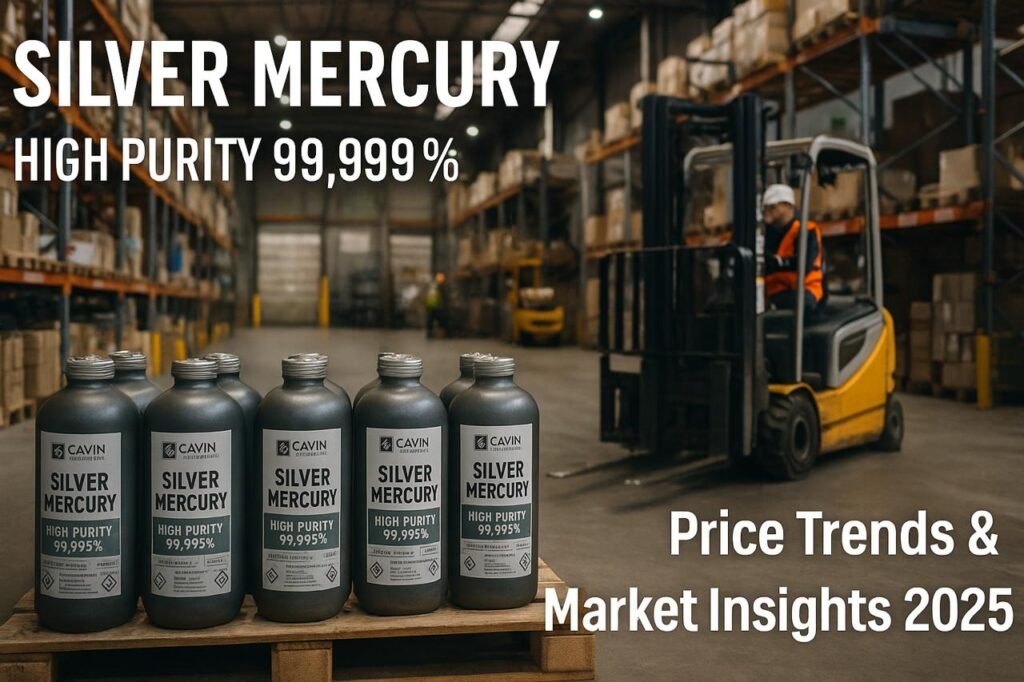
| High Purity Mercury | Sehingga 99.99% | Used in precision applications requiring strict impurity control and full documentation. |
Technical Grade Mercury
Technical grade mercury is typically used in industrial environments where extreme purity is not the primary requirement.
This grade may contain higher levels of trace impurities compared to laboratory or research grades, but it remains suitable for selected non-analytical applications.
Common characteristics include:
- Variable purity levels depending on source and refining process
- Limited documentation compared to higher grades
- Use in general industrial operations where ultra-high precision is not required
Industrial Grade Mercury
Industrial grade mercury is refined to meet more controlled specifications than technical grade material.
It is often used in environments where consistency and performance are important but where full laboratory-grade documentation may not be necessary.
Typical applications include:
- Industrial instrumentation
- Manufacturing processes
- Controlled chemical environments
This grade often includes basic quality documentation and batch traceability.
Laboratory Grade Mercury
Laboratory grade mercury is supplied with higher levels of purity and stricter quality control procedures.
It is commonly used in scientific and analytical environments where consistency and reliability are critical. Buy High Purity Mercury
Key features include:
- Higher purity compared to industrial grades
- Batch-specific documentation
- Certificate of Analysis (COA) availability
- Suitability for controlled laboratory procedures
Research Grade Mercury
Research grade mercury is designed for advanced scientific and analytical applications requiring extremely high levels of purity.
This grade is typically used in specialised research environments where even trace impurities may influence experimental outcomes.
Characteristics include:
- Very high purity levels
- Strict impurity limits
- Comprehensive documentation
- High consistency between batches
High Purity Mercury (Up to 99.99%)
High purity mercury represents the highest commercially available grade in many industrial supply chains.
It is commonly specified for precision applications where material consistency, documentation, and trace impurity control are essential.
Typical features include:
- Purity levels up to 99.99%
- Full documentation package (COA, TDS, SDS)
- Tight quality control standards
- Traceability across production batches
This grade is often requested by laboratories, research institutions, and specialised industrial users requiring verified material quality.
How to Choose the Correct Mercury Grade
Selecting the correct mercury grade depends on the intended application, required documentation, and regulatory environment.
Key considerations include:
- Intended application (industrial, laboratory, or research use)
- Required purity level
- Sensitivity of the application to trace impurities
- Documentation requirements (COA, TDS, SDS)
- Regulatory or compliance obligations
- Supplier reliability and batch traceability
Choosing a higher purity grade than necessary does not always improve performance and may increase procurement cost without operational benefit.
💡 Expert Insight
In many procurement scenarios, the most suitable mercury grade is not the highest purity available, but the grade that best matches the technical requirements of the application. Over-specifying purity can increase costs unnecessarily, while under-specifying can lead to performance inconsistencies or compliance issues.
A structured evaluation of application requirements, documentation needs, and supplier reliability is essential for selecting the correct grade.
Key Takeaway
Mercury purity grades define the level of refinement, quality control, and documentation associated with a product. From technical grade to high purity mercury (up to 99.99%), each grade serves a specific purpose within industrial and laboratory environments.
Understanding these classifications allows procurement teams to select the most appropriate material based on application requirements rather than price alone, ensuring operational reliability, compliance, and consistency across use cases.
In the next chapter, we will explore Spesifikasi Teknikal Mercury, focusing on how specifications are structured in official documentation, including tolerances, impurity thresholds, and quality control parameters used in supplier evaluation.
Chapter 7: Mercury Quality Standards
Mercury quality standards define the formal systems, documentation requirements, and compliance frameworks used to ensure that elemental mercury meets consistent levels of purity, safety, traceability, and regulatory alignment across global supply chains.
These standards are essential in laboratory procurement, industrial sourcing, and international trade because they provide a structured way to verify product quality and supplier reliability. In most professional procurement environments, mercury is not evaluated based on description alone, but on documented compliance with recognized quality systems and batch-specific verification.
Understanding mercury quality standards helps buyers reduce risk, ensure consistency, and maintain compliance with internal and external regulatory requirements.
Core Elements of Mercury Quality Standards
| Category | Tujuan |
|---|---|
| Sijil Analisis | Confirms batch-specific purity and impurity levels |
| Lembaran Data Teknikal (TDS) | Provides detailed physical and chemical specifications |
| Risalah Data Keselamatan | Outlines handling, storage, hazard classification, and safety protocols |
| Kebolehkesanan Kelompok | Ensures each shipment can be traced back to production source |
| Purity Verification | Confirms compliance with declared mercury grade (e.g., 99.99%) |
| Regulatory Compliance | Ensures alignment with international transport and chemical regulations |
| Packaging Standards | Defines safe containment, labeling, and transport requirements |
Sijil Analisis
The Certificate of Analysis (COA) is one of the most important documents in mercury procurement.
It provides batch-specific analytical results, confirming that the mercury supplied meets the declared specification. A COA typically includes:
- Purity percentage
- Trace impurity breakdown
- Nombor kelompok
- Testing methods used
- Production date
- Quality control verification
For laboratory and industrial buyers, the COA serves as primary evidence that the material meets required technical standards. Mercury Specification
Lembaran Data Teknikal (TDS)
The Technical Data Sheet (TDS) provides a structured overview of mercury’s physical and chemical properties.
It typically includes:
- Chemical identification (Hg, CAS 7439-97-6)
- Physical properties (density, melting point, boiling point)
- Chemical characteristics
- Storage recommendations
- Application guidance
Unlike the COA, which is batch-specific, the TDS describes general product characteristics that remain consistent across production batches. Mercury Specification
Risalah Data Keselamatan
The Safety Data Sheet (SDS) outlines essential safety, handling, and hazard information related to mercury.
It is a critical compliance document required in most industrial and laboratory environments.
An SDS typically includes:
- Hazard classification
- Exposure guidelines
- First aid measures
- Spill and containment procedures
- Storage recommendations
- Transport regulations (including UN 2809 classification)
The SDS ensures that all personnel handling mercury are aware of the necessary safety protocols and regulatory obligations.
Batch Traceability and Quality Assurance
Batch traceability ensures that every container of mercury can be traced back to its production origin.
This is essential for:
- Quality control audits
- Regulatory inspections
- Laboratory validation processes
- Supply chain accountability
Traceability systems typically include batch numbers, production records, and quality verification logs.
High-quality suppliers maintain full traceability across the production and distribution chain to support compliance and transparency. Mercury Specification
Regulatory Compliance Frameworks
Mercury is subject to strict international regulations due to its environmental and health considerations.
Quality standards often align with regulatory frameworks such as:
- Chemical safety regulations in major importing countries
- Transport classification systems for hazardous materials
- Environmental protection guidelines
- Occupational health and safety standards
Compliance ensures that mercury is properly classified, packaged, documented, and transported according to applicable laws. Mercury Specification
Packaging and Labelling Standards
Quality standards also extend to packaging requirements.
Mercury must be supplied in containers that ensure:
- Leak-proof containment
- Chemical resistance
- Secure sealing systems
- Proper hazard labelling
- Compliance with transport regulations
Packaging quality is directly linked to product integrity, safety, and regulatory compliance throughout the supply chain.
💡 Expert Insight
In professional procurement, quality standards are just as important as chemical specifications. A supplier may offer high-purity mercury, but without proper documentation and compliance systems, the material may not be acceptable for laboratory, industrial, or international use.
Strong quality systems reduce procurement risk and ensure that every shipment meets consistent, verifiable standards.
Key Takeaway
Mercury quality standards provide the framework that ensures consistency, safety, and regulatory compliance across global supply chains. Through documentation such as COA, TDS, and SDS, along with batch traceability and regulatory alignment, buyers can verify product quality and supplier reliability with confidence.
In the next chapter, we will explore Pengujian Merkuri & Analisis Makmal, focusing on how purity is verified, which analytical methods are used, and how results are interpreted in industrial and laboratory environments. Mercury Specification
Chapter 8: Mercury Testing & Laboratory Analysis
Mercury testing and laboratory analysis refer to the scientific methods used to verify purity, identify trace impurities, and confirm compliance with declared technical specifications. These analytical processes are essential in ensuring that elemental mercury meets the required standards for laboratory, industrial, and research applications.
For procurement professionals and quality assurance teams, laboratory testing provides objective confirmation that the supplied mercury matches its Certificate of Analysis (COA) and declared purity grade. Mercury Specification
Purpose of Mercury Testing
Mercury testing is conducted to ensure:
- ✔️ Verification of purity levels (e.g., 99.99%)
- ✔️ Detection of trace metallic and non-metallic impurities
- ✔️ Confirmation of chemical identity (Hg, CAS 7439-97-6)
- ✔️ Compliance with technical specifications
- ✔️ Batch-to-batch consistency
- ✔️ Regulatory and quality assurance compliance
These tests are typically performed in certified analytical laboratories using advanced instrumentation.
Common Mercury Testing Methods
| Method | Penerangan | Application |
|---|---|---|
| Atomic Absorption Spectroscopy (AAS) | Measures concentration of elements by analyzing absorbed light | Trace metal impurity detection |
| Inductively Coupled Plasma Mass Spectrometry (ICP-MS) | Highly sensitive method for detecting ultra-trace impurities | High-precision purity analysis |
| X-Ray Fluorescence (XRF) | Non-destructive elemental analysis technique | Rapid screening of elemental composition |
| Cold Vapor Atomic Absorption (CV-AAS) | Specialized method for mercury detection | Mercury-specific analysis |
| Gravimetric Analysis | Measures mass changes for composition evaluation | Supporting purity verification |
| Titration Methods | Chemical reaction-based quantitative analysis | Specific impurity measurement |
Atomic Absorption Spectroscopy (AAS)
Atomic Absorption Spectroscopy is widely used for detecting trace metal impurities in mercury samples.
This method works by measuring the absorption of light at specific wavelengths corresponding to different elements.
AAS is particularly useful for:
- Detecting lead, cadmium, copper, and zinc impurities
- Verifying compliance with impurity thresholds
- Supporting Certificate of Analysis (COA) data
Inductively Coupled Plasma Mass Spectrometry (ICP-MS)
ICP-MS is one of the most advanced analytical techniques used in mercury testing.
It provides extremely high sensitivity and can detect impurities at very low concentration levels (parts per billion or lower).
It is commonly used for:
- High-purity mercury verification
- Research-grade material validation
- Detailed impurity profiling
- Regulatory compliance documentation
X-Ray Fluorescence (XRF)
XRF is a non-destructive testing method used to determine the elemental composition of a sample.
Although less sensitive than ICP-MS, it is useful for:
- Rapid screening of mercury samples
- Bulk material verification
- Preliminary quality control checks
Cold Vapor Atomic Absorption (CV-AAS)
CV-AAS is a specialized analytical method designed specifically for mercury detection.
It is widely used in environmental and laboratory settings because of its high selectivity for mercury.
This method is commonly applied for:
- Confirming mercury concentration
- Environmental monitoring
- Laboratory quality control testing
Quality Control in Laboratory Testing
Reliable mercury testing follows strict quality control protocols, including:
- Use of calibrated analytical instruments
- Certified reference materials
- Standardized testing procedures
- Repeated measurements for accuracy
- Documentation of all test results
These controls ensure that analytical results are accurate, repeatable, and suitable for regulatory and procurement decisions. Mercury Specification
Interpreting Test Results
Laboratory results are typically compared against declared specifications to confirm compliance.
Key parameters include:
- Purity percentage
- Maximum allowable impurity levels
- Detection limits of analytical instruments
- Consistency across multiple samples
If test results fall within acceptable tolerance ranges, the batch is considered compliant with its specification.
💡 Expert Insight
In industrial procurement, laboratory testing is the final validation step that confirms whether a supplier’s claims are accurate. Even when documentation such as COA and TDS is provided, independent testing is often used to verify consistency, especially for high-value or high-purity materials.
This is why reputable suppliers maintain strict internal quality control systems before shipment.
Key Takeaway
Mercury testing and laboratory analysis provide the scientific foundation for verifying purity, composition, and compliance. Through advanced techniques such as ICP-MS, AAS, XRF, and CV-AAS, laboratories can accurately confirm whether mercury meets its declared specifications.
For procurement teams, these testing methods ensure transparency, reduce risk, and provide confidence that the material supplied aligns with technical and regulatory requirements.
In the next chapter, we will explore Certificates & Technical Documentation, including COA, TDS, SDS, and regulatory paperwork required for international procurement and compliance.
Chapter 9: Certificates & Technical Documentation
Certificates and technical documentation are the formal records used to verify the identity, quality, safety, and compliance of elemental mercury throughout the global supply chain. These documents form the backbone of industrial procurement, laboratory validation, and regulatory approval processes.
For mercury, documentation is especially important because it ensures that every batch can be traced, verified, and safely handled according to international standards and local regulations.
Without proper documentation, even high-purity mercury cannot be reliably evaluated for laboratory or industrial use.
Key Mercury Documentation Types
| Document | Tujuan |
|---|---|
| Sijil Analisis | Confirms batch-specific purity and impurity levels |
| Lembaran Data Teknikal (TDS) | Provides physical and chemical specifications |
| Risalah Data Keselamatan | Outlines hazards, handling procedures, and safety measures |
| Material Specification Sheet | Summarises product technical requirements |
| Batch Traceability Record | Tracks production source and shipment history |
| Regulatory Compliance Certificate | Confirms adherence to transport and chemical regulations |
| Transport Documentation | Required for shipping hazardous materials (UN 2809) |
Sijil Analisis
The Certificate of Analysis (COA) is the most critical document in mercury procurement.
It provides batch-specific verification of product quality and confirms whether the mercury meets declared specifications.
A typical COA includes:
- Product name and chemical identity (Hg)
- CAS Number (7439-97-6)
- Batch or lot number
- Purity percentage
- Trace impurity breakdown
- Analytical testing methods used
- Quality control approval signature
- Production and testing dates
For procurement teams, the COA acts as the primary proof that the material delivered matches the agreed technical specification.
Lembaran Data Teknikal (TDS)
The Technical Data Sheet (TDS) provides general product information that applies across all batches of mercury within a defined grade.
It typically includes:
- Chemical identity and classification
- Physical properties (density, melting point, boiling point)
- General purity range
- Storage recommendations
- Application guidance
- Handling considerations
Unlike the COA, the TDS is not batch-specific but instead defines the standard characteristics of the product grade.
Risalah Data Keselamatan
The Safety Data Sheet (SDS) is a mandatory document that outlines safety, hazard classification, and emergency procedures associated with mercury.
It includes:
- Hazard identification and classification
- First aid measures
- Firefighting instructions
- Spill and containment procedures
- Safe handling and storage practices
- Exposure controls and protective measures
- Transport classification (including UN 2809)
The SDS ensures compliance with occupational health and safety regulations and provides essential guidance for laboratory and industrial handling.
Kebolehkesanan Kelompok
Batch traceability ensures that every shipment of mercury can be traced back to its origin.
This includes:
- Production facility identification
- Batch or lot number assignment
- Manufacturing date
- Quality control records
- Distribution history
Traceability is essential for audits, compliance checks, and quality assurance investigations.
Regulatory Compliance Documentation
Mercury is subject to strict international regulations due to its classification as a hazardous substance.
Compliance documentation may include:
- Import/export permits (where required)
- Dangerous goods declarations
- Transport classification certificates
- Environmental compliance statements
- Chemical inventory registration documents
These documents ensure that mercury is legally and safely transported across international borders.
Transport Documentation (UN 2809)
Mercury is classified under UN 2809 for transport purposes.
This classification requires:
- Proper hazardous goods labeling
- Approved packaging standards
- Documentation for freight carriers
- Compliance with international transport regulations (air, sea, and land)
Transport documentation ensures safe and compliant movement of mercury throughout the logistics chain.
Why Documentation Matters in Procurement
Technical documentation is not optional in professional mercury procurement—it is a core requirement.
Proper documentation helps organisations:
- ✔️ Verify product authenticity
- ✔️ Confirm purity and quality
- ✔️ Meet regulatory compliance requirements
- ✔️ Pass internal audits and inspections
- ✔️ Ensure safe handling and storage
- ✔️ Maintain supply chain transparency
- ✔️ Reduce procurement risk
Without these documents, procurement teams cannot reliably validate supplier claims or ensure regulatory compliance.
💡 Expert Insight
In high-value chemical procurement, documentation is often as important as the product itself. A supplier offering high-purity mercury without proper COA, SDS, and traceability records may introduce significant compliance and operational risk.
Strong documentation systems are a key indicator of supplier reliability and quality control maturity.
Key Takeaway
Certificates and technical documentation form the verification backbone of mercury procurement. The COA confirms batch quality, the TDS defines product characteristics, and the SDS ensures safe handling and compliance.
Together with traceability and regulatory records, these documents ensure transparency, safety, and consistency across the global supply chain.
In the next chapter, we will explore Industrial & Laboratory Applications of Mercury, focusing on where mercury is used, why it is selected for specific applications, and how purity requirements vary across different industries.
Chapter 9: Certificates & Technical Documentation
Certificates and technical documentation are the formal records used to verify the identity, quality, safety, and compliance of elemental mercury throughout the global supply chain. These documents form the backbone of industrial procurement, laboratory validation, and regulatory approval processes.
For mercury, documentation is especially important because it ensures that every batch can be traced, verified, and safely handled according to international standards and local regulations.
Without proper documentation, even high-purity mercury cannot be reliably evaluated for laboratory or industrial use.
Key Mercury Documentation Types
| Document | Tujuan |
|---|---|
| Sijil Analisis | Confirms batch-specific purity and impurity levels |
| Lembaran Data Teknikal (TDS) | Provides physical and chemical specifications |
| Risalah Data Keselamatan | Outlines hazards, handling procedures, and safety measures |
| Material Specification Sheet | Summarises product technical requirements |
| Batch Traceability Record | Tracks production source and shipment history |
| Regulatory Compliance Certificate | Confirms adherence to transport and chemical regulations |
| Transport Documentation | Required for shipping hazardous materials (UN 2809) |
Sijil Analisis
The Certificate of Analysis (COA) is the most critical document in mercury procurement.
It provides batch-specific verification of product quality and confirms whether the mercury meets declared specifications.
A typical COA includes:
- Product name and chemical identity (Hg)
- CAS Number (7439-97-6)
- Batch or lot number
- Purity percentage
- Trace impurity breakdown
- Analytical testing methods used
- Quality control approval signature
- Production and testing dates
For procurement teams, the COA acts as the primary proof that the material delivered matches the agreed technical specification.
Lembaran Data Teknikal (TDS)
The Technical Data Sheet (TDS) provides general product information that applies across all batches of mercury within a defined grade.
It typically includes:
- Chemical identity and classification
- Physical properties (density, melting point, boiling point)
- General purity range
- Storage recommendations
- Application guidance
- Handling considerations
Unlike the COA, the TDS is not batch-specific but instead defines the standard characteristics of the product grade.
Risalah Data Keselamatan
The Safety Data Sheet (SDS) is a mandatory document that outlines safety, hazard classification, and emergency procedures associated with mercury.
It includes:
- Hazard identification and classification
- First aid measures
- Firefighting instructions
- Spill and containment procedures
- Safe handling and storage practices
- Exposure controls and protective measures
- Transport classification (including UN 2809)
The SDS ensures compliance with occupational health and safety regulations and provides essential guidance for laboratory and industrial handling.
Kebolehkesanan Kelompok
Batch traceability ensures that every shipment of mercury can be traced back to its origin.
This includes:
- Production facility identification
- Batch or lot number assignment
- Manufacturing date
- Quality control records
- Distribution history
Traceability is essential for audits, compliance checks, and quality assurance investigations.
Regulatory Compliance Documentation
Mercury is subject to strict international regulations due to its classification as a hazardous substance.
Compliance documentation may include:
- Import/export permits (where required)
- Dangerous goods declarations
- Transport classification certificates
- Environmental compliance statements
- Chemical inventory registration documents
These documents ensure that mercury is legally and safely transported across international borders.
Transport Documentation (UN 2809)
Mercury is classified under UN 2809 for transport purposes.
This classification requires:
- Proper hazardous goods labeling
- Approved packaging standards
- Documentation for freight carriers
- Compliance with international transport regulations (air, sea, and land)
Transport documentation ensures safe and compliant movement of mercury throughout the logistics chain.
Why Documentation Matters in Procurement
Technical documentation is not optional in professional mercury procurement—it is a core requirement.
Proper documentation helps organisations:
- ✔️ Verify product authenticity
- ✔️ Confirm purity and quality
- ✔️ Meet regulatory compliance requirements
- ✔️ Pass internal audits and inspections
- ✔️ Ensure safe handling and storage
- ✔️ Maintain supply chain transparency
- ✔️ Reduce procurement risk
Without these documents, procurement teams cannot reliably validate supplier claims or ensure regulatory compliance.
💡 Expert Insight
In high-value chemical procurement, documentation is often as important as the product itself. A supplier offering high-purity mercury without proper COA, SDS, and traceability records may introduce significant compliance and operational risk.
Strong documentation systems are a key indicator of supplier reliability and quality control maturity.
Key Takeaway
Certificates and technical documentation form the verification backbone of mercury procurement. The COA confirms batch quality, the TDS defines product characteristics, and the SDS ensures safe handling and compliance.
Together with traceability and regulatory records, these documents ensure transparency, safety, and consistency across the global supply chain.
In the next chapter, we will explore Industrial & Laboratory Applications of Mercury, focusing on where mercury is used, why it is selected for specific applications, and how purity requirements vary across different industries.
Chapter 10: Industrial & Laboratory Applications of Mercury
Mercury has historically played an important role in a range of industrial, scientific, and laboratory applications due to its unique physical and chemical properties. Although many traditional uses have been reduced or replaced due to environmental and health regulations, mercury continues to be used in specific controlled environments where its performance characteristics remain difficult to replicate with alternative materials.
Understanding these applications helps procurement professionals, laboratory managers, and industrial buyers evaluate whether mercury is suitable for their operational requirements and why specific purity grades and specifications are required.
Key Application Areas of Mercury
| Sector | Application | Tujuan |
|---|---|---|
| Penyelidikan Makmal | Analytical studies and controlled experiments | Used in scientific analysis under regulated conditions |
| Calibration Systems | Precision measurement instruments | Provides stable reference properties |
| Industrial Instrumentation | Specialized sensing and control devices | Supports legacy and niche equipment systems |
| Chemical Research | Controlled chemical reactions and studies | Used in limited research applications |
| Materials Science | Physical property testing and evaluation | Supports experimental material studies |
| Educational Demonstrations | Scientific teaching and demonstrations | Used under controlled institutional settings |
Laboratory Research Applications
In laboratory environments, mercury is used in controlled research settings where its physical and chemical properties are required for experimental analysis.
Applications may include:
- Analytical chemistry studies
- Physical property evaluation
- Controlled laboratory experiments
- Reference material comparisons
Laboratory use typically requires high-purity mercury supported by full documentation, including Certificate of Analysis (COA), Technical Data Sheet (TDS), and Safety Data Sheet (SDS).
Calibration and Measurement Systems
Mercury has historically been used in precision calibration and measurement systems due to its:
- High density
- Predictable thermal expansion
- Stable physical behavior
These characteristics allow mercury to serve as a reference material in specialized measurement equipment.
Although many modern systems now use alternative technologies, mercury-based calibration systems are still referenced in certain legacy or niche applications where permitted.
Industrial Instrumentation
In selected industrial environments, mercury has been used in specialized instrumentation systems designed for measurement, sensing, or control functions.
These applications rely on mercury’s:
- Electrical conductivity
- Thermal response characteristics
- Liquid state behavior at room temperature
Use in industrial instrumentation is now highly regulated and often limited to specific legacy systems or controlled applications.
Chemical and Materials Research
Mercury is sometimes used in controlled chemical and materials research environments to study:
- Elemental behavior under specific conditions
- Reaction mechanisms involving metallic elements
- Physical property interactions in controlled systems
These applications are strictly limited to regulated research facilities with appropriate safety controls and compliance systems.
Educational and Demonstration Use
In some institutional environments, mercury is used for educational demonstrations to illustrate:
- Density differences between materials
- Metallic liquid behavior
- Thermal expansion principles
These uses are typically conducted under strict supervision and regulatory compliance due to safety considerations.
Purity Requirements by Application
Different applications require different mercury purity levels.
| Application | Recommended Purity |
|---|---|
| Educational Demonstration | Technical Grade |
| Industrial Instrumentation | Industrial Grade |
| Penyelidikan Makmal | Laboratory Grade |
| Calibration Systems | High Purity |
| Advanced Scientific Research | Research Grade (up to 99.99%) |
Selecting the correct purity grade is essential to ensure both performance suitability and compliance with safety and regulatory standards.
💡 Expert Insight
In modern procurement, application suitability is more important than availability. Mercury should never be selected based solely on price or general description. Instead, buyers should evaluate:
- Intended application
- Required purity level
- Documentation requirements
- Regulatory restrictions
This ensures that the material is both technically appropriate and compliant with applicable laws and institutional policies.
Key Takeaway
Mercury continues to be used in selected laboratory, industrial, and research environments where its unique physical and chemical properties provide specific functional advantages. However, its use is highly regulated, and applications vary significantly depending on purity grade, documentation requirements, and compliance obligations.
Understanding where and how mercury is used allows procurement professionals to select the correct specification and ensure alignment with operational and regulatory requirements.
In the next chapter, we will explore Packaging, Storage & Handling Requirements, focusing on how mercury is safely contained, transported, and stored throughout the supply chain.
Chapter 11: Packaging, Storage & Handling Requirements
Proper packaging, storage, and handling are essential components of mercury quality management. Beyond preserving product integrity, these practices help support regulatory compliance, maintain batch traceability, and reduce the risk of contamination or damage during transportation and storage.
For laboratories, research institutions, and industrial buyers, packaging specifications are often reviewed alongside technical documentation when evaluating suppliers. Well-designed packaging systems protect the product throughout the supply chain while supporting safe logistics and inventory management.
Mercury Packaging Overview
| Packaging Element | Tujuan |
|---|---|
| Primary Container | Provides secure containment and minimizes the risk of leakage. |
| Pembungkusan Sekunder | Adds protection during transportation and handling. |
| Tamper-Evident Seals | Helps verify that packaging has not been opened after quality inspection. |
| Product Labels | Identify the material, batch number, and applicable hazard information. |
| Batch Identification | Supports quality assurance and product traceability. |
| Transport Packaging | Designed to meet applicable transport requirements for hazardous materials. |
Packaging Requirements
Mercury packaging should be designed to preserve product quality while meeting applicable transportation and regulatory requirements.
Professional suppliers generally focus on:
- Leak-resistant primary containers
- Durable secondary protective packaging
- Secure sealing systems
- Clear product identification
- Batch and lot traceability
- Appropriate hazard communication labels
- Packaging suitable for the intended mode of transport
These measures help maintain product integrity from shipment through final delivery.
Storage Considerations
After delivery, organisations typically establish storage procedures based on their internal policies, applicable regulations, and the manufacturer’s documentation.
Storage management generally focuses on:
- Maintaining product traceability
- Protecting packaging integrity
- Preventing unnecessary container damage
- Restricting access to authorised personnel
- Following applicable environmental, occupational, and regulatory requirements
Laboratories and industrial facilities should always consult the supplier’s Safety Data Sheet (SDS) and comply with local regulations when developing storage procedures.
Product Identification and Labelling
Clear and accurate labelling plays a vital role in inventory management and quality assurance.
Typical product labels may include:
- Nama produk
- Chemical symbol (Hg)
- CAS Number (7439-97-6)
- Batch or lot number
- Net quantity
- Maklumat pembekal
- Hazard communication elements required under applicable regulations
Consistent labelling improves traceability and simplifies inventory control throughout the product lifecycle.
Kebolehkesanan Kelompok
Batch traceability enables organisations to identify the production history of each shipment.
A comprehensive traceability system may include:
- Production batch number
- Manufacturing records
- Quality control documentation
- Sijil Analisis
- Distribution records
- Delivery documentation
Maintaining complete traceability supports audits, quality investigations, supplier evaluations, and regulatory compliance.
Pertimbangan Pengangkutan
Mercury transportation is subject to international and national regulations governing hazardous materials.
Professional suppliers typically provide documentation supporting compliant transport, including:
- Transport classification
- Shipment documentation
- Packaging verification
- Pengenalan produk
- Regulatory declarations where applicable
Transport requirements vary by country and mode of transportation. Importers and buyers should verify local requirements before arranging international shipments.
Supplier Responsibilities
When evaluating mercury suppliers, buyers should consider whether the supplier can provide:
- Consistent packaging standards
- Batch-specific documentation
- Product traceability
- Technical support
- Dokumentasi pematuhan
- Reliable logistics coordination
These capabilities often indicate a mature quality management system and contribute to a more dependable procurement process.
💡 Expert Insight
In professional chemical procurement, packaging is more than a shipping requirement—it is part of the overall quality system. Secure packaging, accurate labelling, and complete traceability protect both the product and the integrity of the supply chain.
When comparing suppliers, buyers should evaluate the complete packaging and documentation system rather than focusing solely on product specifications.
Key Takeaway
Packaging, storage, and handling requirements form an essential part of mercury quality management. Appropriate packaging protects product integrity, accurate labelling supports traceability, and comprehensive documentation helps organisations meet quality assurance and regulatory requirements.
For procurement teams, evaluating these factors alongside technical specifications and quality documentation provides a more complete assessment of supplier capability and product reliability.
The next chapter introduces a practical Senarai Semak Perolehan Mercury, bringing together the technical, documentation, quality, and supplier evaluation criteria discussed throughout this guide into a structured decision-making framework.
Chapter 12: Mercury Procurement Checklist
Purchasing mercury for laboratory, research, or specialised industrial applications requires more than comparing prices. Procurement teams must evaluate technical specifications, documentation, supplier capabilities, regulatory compliance, and logistics to ensure the material meets operational requirements.
A structured procurement checklist helps buyers reduce risk, improve supplier selection, and maintain consistency across purchasing decisions.
Whether sourcing mercury for a one-time project or establishing a long-term supply agreement, reviewing the following criteria can support a more informed procurement process.
Mercury Procurement Evaluation Checklist
| Evaluation Area | Questions to Consider |
|---|---|
| Product Identity | Does the documentation clearly identify the product as elemental mercury (Hg) with the correct CAS Number (7439-97-6)? |
| Gred Ketulenan | Does the declared purity align with the technical requirements of the intended application? |
| Sijil Analisis | Is a batch-specific COA available to verify purity and analytical results? |
| Lembaran Data Teknikal (TDS) | Has the supplier provided a current Technical Data Sheet with relevant specifications? |
| Risalah Data Keselamatan | Is an up-to-date SDS available for regulatory and workplace requirements? |
| Kebolehkesanan Kelompok | Can the shipment be traced through batch or lot identification? |
| Kualiti Pembungkusan | Is the packaging appropriate for transport and product protection? |
| Regulatory Compliance | Does the supplier provide the documentation required for the destination market? |
| Supplier Experience | Does the supplier have experience supporting laboratory or industrial procurement? |
| Logistics Support | Can the supplier support export documentation, shipment coordination, and delivery requirements? |
Step 1: Confirm Product Specifications
Before requesting a quotation, buyers should verify that the supplier’s technical specifications match the intended application.
Key points include:
- Declared purity level
- Sifat fizikal dan kimia
- Product grade
- Available technical documentation
- Spesifikasi pembungkusan
Reviewing these details early in the procurement process helps avoid unnecessary delays and ensures the requested product aligns with operational requirements.
Step 2: Review Quality Documentation
Quality documentation provides objective evidence that the product has been tested and documented according to established quality procedures.
Important documents include:
- Sijil Analisis
- Lembaran Data Teknikal (TDS)
- Risalah Data Keselamatan
- Batch traceability records
Together, these documents support quality assurance, supplier evaluation, and regulatory compliance.
Step 3: Evaluate Supplier Capabilities
A supplier should be assessed on more than product availability.
Consider whether the supplier can provide:
- Consistent product quality
- Batch-to-batch traceability
- Responsive technical support
- Reliable communication
- Export and logistics experience
- Documentation required for international trade
Long-term supplier reliability is often more valuable than short-term price advantages.
Step 4: Consider Regulatory Requirements
Mercury procurement may involve national and international regulations relating to transport, import, export, storage, and workplace safety.
Before placing an order, organisations should confirm:
- Applicable import requirements
- Transport documentation
- Local regulatory obligations
- Internal compliance procedures
Requirements vary by country and industry, making regulatory review an important part of the procurement process.
Step 5: Assess Logistics and Delivery
Efficient logistics support helps reduce delays and ensures documentation accompanies the shipment.
Procurement teams may wish to confirm:
- Packaging suitability
- Shipment tracking
- Export documentation
- Delivery timelines
- Batch identification
- Product integrity upon arrival
Reliable logistics coordination contributes to a smoother procurement experience.
Procurement Decision Matrix
| Procurement Factor | Importance |
|---|---|
| Product Purity | ⭐⭐⭐⭐⭐ |
| Technical Documentation | ⭐⭐⭐⭐⭐ |
| Kebolehkesanan Kelompok | ⭐⭐⭐⭐⭐ |
| Regulatory Compliance | ⭐⭐⭐⭐⭐ |
| Supplier Reputation | ⭐⭐⭐⭐☆ |
| Logistics Capability | ⭐⭐⭐⭐☆ |
| Technical Support | ⭐⭐⭐⭐☆ |
| Pricing | ⭐⭐⭐☆☆ |
This matrix illustrates that technical quality and documentation often carry greater long-term value than price alone, particularly in laboratory and regulated industrial environments.
💡 Expert Insight
Successful procurement is built on consistency rather than cost alone. A well-documented supplier offering complete technical support, traceability, and quality assurance can significantly reduce operational risk compared to selecting a supplier based solely on the lowest quotation.
For many organisations, the total cost of procurement includes product quality, documentation, compliance, logistics, and long-term supplier reliability—not just the purchase price.
Chapter Summary
- A structured procurement process reduces purchasing risk.
- Product specifications should always be reviewed before requesting quotations.
- COA, TDS, and SDS are essential procurement documents.
- Supplier capability extends beyond product availability.
- Documentation, traceability, and compliance are often more valuable than price alone.
Key Takeaway
An effective mercury procurement process combines technical evaluation, quality documentation, supplier assessment, and regulatory compliance into a single decision-making framework. By following a structured procurement checklist, laboratories, industrial buyers, and research organisations can improve purchasing confidence, support quality assurance objectives, and establish more reliable long-term supplier relationships.
In the next chapter, we will examine Cara Memilih Pembekal Merkuri yang Boleh Dipercayai, including the characteristics of dependable suppliers, questions buyers should ask before purchasing, and best practices for evaluating long-term supply partners.
Chapter 13: How to Choose a Reliable Mercury Supplier
Selecting a mercury supplier involves more than comparing prices or product availability. For laboratories, industrial buyers, research institutions, and international procurement teams, supplier selection should be based on technical competence, documentation quality, regulatory compliance, and long-term reliability.
A dependable supplier helps reduce procurement risks by providing consistent product quality, transparent documentation, responsive technical support, and reliable logistics. These factors are particularly important when sourcing high-purity mercury for applications that demand strict quality assurance and traceability.
Whether purchasing for laboratory research, industrial processes, or specialised scientific applications, evaluating suppliers against objective criteria leads to better procurement decisions and stronger supply chain resilience.
| Evaluation Area | Why It Matters |
|---|---|
| Product Quality | Confirms the supplied mercury meets declared specifications. |
| Purity Verification | Ensures purity is supported by analytical testing. |
| Dokumentasi | COA, TDS, SDS, and batch records demonstrate transparency. |
| Kebolehkesanan | Allows every shipment to be traced back to production. |
| Regulatory Knowledge | Supports compliant domestic and international transactions. |
| Packaging Standards | Protects product integrity during storage and transportation. |
| Logistics Capability | Improves delivery reliability and documentation accuracy. |
| Technical Support | Assists buyers with product selection and documentation questions. |
| Industry Experience | Indicates familiarity with laboratory and industrial requirements. |
| Customer Service | Supports efficient communication before and after purchase. |
Product Quality Should Always Come First
The first consideration when evaluating a supplier should be product quality.
A professional supplier should be able to provide:
- Clearly defined technical specifications
- Declared purity levels
- Batch-specific analytical results
- Consistent quality across multiple orders
- Reliable quality control procedures
Quality should always be supported by documentation rather than marketing claims alone.
Verify Technical Documentation
Reliable suppliers maintain complete documentation for every shipment.
Important documents include:
- Sijil Analisis
- Lembaran Data Teknikal (TDS)
- Risalah Data Keselamatan
- Batch traceability records
- Transport documentation where applicable
These documents allow buyers to independently verify product specifications and support internal quality assurance procedures.
Evaluate Traceability Systems
Traceability is a key indicator of supplier maturity.
An effective traceability system allows organisations to identify:
- Production batch
- Manufacturing records
- Quality inspection history
- Distribution pathway
- Shipment documentation
Complete traceability supports audits, investigations, and long-term procurement confidence.
Assess Regulatory and Export Experience
International mercury procurement often requires detailed documentation and knowledge of applicable regulations.
Experienced suppliers should understand:
- Import and export documentation requirements
- Hazardous materials transport regulations
- Product classification requirements
- Packaging and labelling obligations
- Country-specific compliance considerations
Regulatory expertise can help reduce delays and improve the efficiency of international shipments.
Review Packaging and Logistics Capabilities
Reliable logistics are an important part of supplier performance.
When evaluating suppliers, buyers should consider:
- Packaging quality
- Shipment preparation
- Documentation accuracy
- Delivery coordination
- Communication throughout the shipping process
Strong logistics systems help maintain product integrity while reducing the likelihood of administrative or transport-related issues.
Consider Long-Term Supply Reliability
Many industrial organisations and laboratories prefer long-term supplier relationships over one-time purchases.
Factors supporting long-term reliability include:
- Consistent product availability
- Stable quality standards
- Responsive customer support
- Reliable documentation
- Transparent communication
- Proven industry experience
A dependable supplier becomes a strategic partner rather than simply a vendor.
Questions to Ask Before Purchasing
Before placing an order, procurement teams should consider asking:
- Is the declared purity independently verified?
- Is a batch-specific COA available?
- Can the supplier provide current TDS and SDS documents?
- Is full batch traceability maintained?
- Does the supplier have experience with international shipments?
- What documentation accompanies each order?
- How are products packaged for transport?
- What level of technical support is available after purchase?
These questions help buyers compare suppliers using objective criteria instead of marketing claims.
💡 Expert Insight
Professional procurement teams rarely select suppliers based on price alone. Long-term value is typically determined by product consistency, documentation quality, technical expertise, communication, and supply chain reliability.
Investing time in supplier evaluation can significantly reduce operational disruptions, compliance risks, and unexpected procurement costs.
Chapter Summary
- Reliable suppliers provide more than just the product—they provide confidence.
- Documentation and traceability are essential procurement requirements.
- Quality assurance systems should support every shipment.
- Regulatory knowledge improves international procurement efficiency.
- Long-term supplier relationships often deliver greater value than one-time transactions.
Key Takeaway
Choosing a reliable mercury supplier requires a balanced evaluation of product quality, technical documentation, regulatory expertise, logistics capability, and long-term reliability. By assessing suppliers against these criteria, procurement professionals can reduce purchasing risk, improve operational consistency, and build stronger supply chain partnerships.
Next Chapter: Frequently Asked Questions About Mercury Specifications & High-Purity Mercury — a comprehensive FAQ designed to capture long-tail search traffic and strengthen topical authority.
📄 Free Procurement Resource
Download here:
📥 Mercury_Procurement_Checklist_Cavin_Resource.pdf
Download the Mercury Procurement Evaluation Checklist (PDF) to help your purchasing team compare suppliers, verify documentation, and evaluate product quality before placing an order.
Includes:
- Supplier evaluation checklist
- Documentation requirements (COA, TDS, SDS)
- Quality verification points
- Procurement decision framework
- Logistics and compliance review
Chapter 14: Frequently Asked Questions (FAQ)
What is high-purity mercury?
High-purity mercury is elemental mercury that has undergone advanced refining processes to achieve very low impurity levels. It is commonly specified for laboratory research, analytical testing, precision measurement, and specialised industrial applications where consistency and traceability are important.
What purity grade is commonly used for laboratory applications?
The required purity depends on the intended use. Many laboratory and analytical applications require high-purity mercury supported by batch-specific quality documentation, including a Certificate of Analysis (COA).
What is the CAS Number for elemental mercury?
The internationally recognised CAS Number for elemental mercury is 7439-97-6.
This identifier is used in procurement documentation, laboratory records, regulatory filings, and chemical databases worldwide.
What is the chemical symbol for mercury?
Mercury is represented by the chemical symbol Hg, which originates from the Latin word hydrargyrum, meaning “liquid silver.”
Why are mercury specifications important?
Specifications help buyers understand the quality, purity, composition, and technical characteristics of the material before procurement.
They also allow laboratories and industrial organisations to compare suppliers using objective technical criteria.
What documents should accompany mercury shipments?
Professional suppliers commonly provide:
- Sijil Analisis
- Lembaran Data Teknikal (TDS)
- Risalah Data Keselamatan
- Batch traceability information
- Transport documentation, where applicable
The documentation supplied may vary depending on the destination country, regulatory requirements, and intended application.
What information is included in a Certificate of Analysis (COA)?
A COA generally contains:
- Pengenalan produk
- Batch or lot number
- Purity results
- Trace impurity analysis
- Test methods
- Date of analysis
- Quality approval information
The COA provides batch-specific verification that the supplied material meets the declared specification.
What is the difference between a COA and a TDS?
A Sijil Analisis confirms the analytical results for a specific production batch.
A Lembaran Data Teknikal (TDS) provides the standard physical and chemical characteristics of the product grade and is not normally batch-specific.
Together, these documents provide a complete technical overview.
What industries continue to use mercury?
Although regulations have reduced many traditional applications, mercury continues to be used in selected:
- Scientific research laboratories
- Calibration facilities
- Industrial instrumentation
- Analytical laboratories
- Materials science research
- Educational institutions operating under applicable regulations
The specific applications permitted vary by country and industry.
How is mercury purity verified?
Purity is typically confirmed through laboratory analysis using recognised analytical techniques such as:
- Atomic Absorption Spectroscopy (AAS)
- Inductively Coupled Plasma Mass Spectrometry (ICP-MS)
- Cold Vapor Atomic Absorption (CV-AAS)
- X-Ray Fluorescence (XRF), where appropriate
The results are usually documented in the Certificate of Analysis.
Why is batch traceability important?
Batch traceability allows organisations to identify the origin, production history, and quality records associated with each shipment.
This supports:
- Internal quality assurance
- Supplier evaluation
- Pematuhan peraturan
- Product consistency
- Audit readiness
What should buyers evaluate before selecting a supplier?
Buyers should consider:
- Spesifikasi produk
- Tahap ketulenan
- Available documentation
- Batch traceability
- Packaging standards
- Regulatory expertise
- Technical support
- Logistics capability
- Long-term reliability
Evaluating these factors helps reduce procurement risk and improve supply chain performance.
Is higher purity always better?
Not necessarily.
The most appropriate purity grade depends on the intended application, technical requirements, and regulatory obligations.
Selecting a higher purity than required may increase procurement costs without providing additional operational benefits.
How should mercury specifications be compared between suppliers?
Rather than comparing price alone, buyers should review:
- Purity declarations
- Trace impurity limits
- Testing methods
- COA availability
- Technical documentation
- Batch consistency
- Supplier quality systems
- Packaging standards
This provides a more accurate comparison of overall supplier capability.
Can mercury be shipped internationally?
International shipments are subject to national and international regulations governing hazardous materials, import controls, export documentation, and transportation requirements.
Requirements vary depending on the destination country, carrier, and applicable legal framework. Buyers should confirm all regulatory obligations before arranging shipments.
How often should procurement teams review supplier documentation?
Documentation should be reviewed with every shipment to confirm that the product received matches the agreed specification and that batch-specific records remain complete and current.
Regular review supports quality assurance, regulatory compliance, and procurement consistency.
💡 Expert Insight
Many procurement challenges arise not because the product is unsuitable, but because documentation, specifications, or supplier capabilities were not fully evaluated before purchase. Establishing a consistent review process for each order can significantly improve procurement outcomes and reduce operational risk.
Chapter 15: Related Mercury Resources & Buying Guides
A well-informed procurement decision often requires more than a single reference document. Alongside mercury specifications, buyers may need information about pricing, purity, laboratory documentation, supplier evaluation, and regulatory considerations.
The following resources have been prepared to help laboratories, procurement teams, industrial buyers, and researchers better understand elemental mercury while navigating purchasing and technical evaluation processes.
Together, these guides form the Pusat Pengetahuan Merkuri Sumber Cavin, providing structured information that supports procurement decisions, supplier comparisons, and product evaluation.
📚 Mercury Knowledge Centre
Mercury Product Information
👉 High Purity Mercury (99.99%) Product Page
Learn more about product specifications, available purity, documentation, packaging information, and purchasing enquiries.
Primary Internal Link
Mercury Pricing Guides
Understand how mercury pricing varies according to purity, quantity, market conditions, documentation requirements, and international supply factors.
Recommended resources:
- Harga Merkuri Segram
- Mercury Price Per Kilogram
- Harga Merkuri Setiap Paun
- Harga Merkuri Sepuluh Auns
- Mercury Price Guide
- Mercury Market Trends
Mercury Specifications & Quality
Continue exploring technical information through these in-depth guides:
- Gred Ketulenan Merkuri
- Spesifikasi Teknikal Mercury
- Piawaian Kualitas Merkuri
- Mercury Laboratory Testing
- Mercury Certificate of Analysis (COA)
- Mercury Technical Data Sheet (TDS)
- Mercury Safety Data Sheet (SDS)
Mercury Buying Guides
Procurement-focused resources include:
- Where to Buy Mercury
- How to Choose a Mercury Supplier
- Mercury Procurement Guide
- Mercury Buying Checklist
- Mercury Packaging & Documentation
- Dokumentasi Eksport Merkuri
Mercury Technical Knowledge
Expand your understanding of mercury with additional technical resources covering:
- Physical Properties of Mercury
- Chemical Properties of Mercury
- Mercury Density
- Mercury Melting Point
- Mercury Boiling Point
- Mercury CAS Number
- Mercury Chemical Symbol (Hg)
- Mercury Industrial Applications
- Mercury Laboratory Applications
💡 Expert Insight
The strongest procurement decisions are supported by multiple sources of information rather than a single specification sheet. Reviewing product specifications alongside pricing guides, quality documentation, supplier evaluations, and technical references provides a more complete understanding of the material and helps buyers make informed decisions.
Chapter 16: References & Further Reading
The information presented in this guide has been developed to provide a practical overview of mercury specifications, purity grades, quality documentation, procurement considerations, and technical characteristics. Readers seeking additional scientific or regulatory information are encouraged to consult the following authoritative resources.
These organizations publish technical data, regulatory guidance, chemical identification information, and scientific references that support laboratory, industrial, and procurement professionals.
International Chemical Identification
CAS (Chemical Abstracts Service)
Provides internationally recognized chemical identification numbers used in procurement, laboratory documentation, and regulatory systems.
Chemical Data & Scientific References
PubChem (National Center for Biotechnology Information)
Comprehensive chemical database containing elemental information, physical properties, identifiers, and scientific references.
https://pubchem.ncbi.nlm.nih.gov
Occupational Safety Information
Occupational Safety and Health Administration (OSHA)
Publishes occupational safety guidance, workplace regulations, and hazard communication requirements relevant to chemical handling.
Workplace Exposure Guidance
National Institute for Occupational Safety and Health (NIOSH)
Provides scientific publications, occupational exposure recommendations, and technical resources for workplace safety.
International Chemical Safety
International Programme on Chemical Safety (IPCS)
A collaborative programme of international organizations that publishes Environmental Health Criteria documents and chemical safety information.
Environmental Information
United Nations Environment Programme (UNEP)
Provides international resources relating to mercury management, environmental initiatives, and global policy developments.
International Standards
International Organization for Standardization (ISO)
Develops globally recognized standards used across manufacturing, laboratory quality management, testing, and industrial processes.
Laboratory Accreditation
International Laboratory Accreditation Cooperation (ILAC)
Provides information on laboratory accreditation systems and international recognition of testing and calibration laboratories.
Scientific Literature
Readers requiring peer-reviewed technical research may also consult:
- Scientific journals in analytical chemistry
- Materials science publications
- Chemical engineering journals
- Laboratory quality management literature
- International conference proceedings related to analytical chemistry and industrial materials
💡 Expert Insight
Technical specifications provide only one part of the decision-making process. Procurement professionals often combine supplier documentation with scientific references, regulatory guidance, laboratory standards, and industry best practices before approving a supplier or material for use.
Consulting authoritative references helps organizations maintain robust quality assurance systems and stay informed about evolving technical and regulatory requirements.
Chapter 17: Conclusion & Procurement Support
After working through this publication, readers should have a comprehensive understanding of elemental mercury, including its physical and chemical properties, purity classifications, technical specifications, quality standards, laboratory testing methods, documentation requirements, packaging considerations, and procurement best practices.
Rather than viewing mercury as simply another industrial material, procurement professionals should evaluate it through a structured framework that considers:
- Product identity and technical specifications
- Purity grades appropriate for the intended application
- Laboratory verification and quality assurance
- Batch traceability and documentation
- Supplier capability and regulatory knowledge
- Packaging, logistics, and long-term supply reliability
Taking this holistic approach helps organisations reduce procurement risk, improve quality consistency, and establish more dependable supplier relationships.
Why Technical Documentation Matters
Every procurement decision should be supported by reliable technical documentation.
Before placing an order, buyers should confirm the availability of:
- ✔️ Sijil Analisis (COA)
- ✔️ Helaian Data Teknikal (TDS)
- ✔️ Risalah Data Keselamatan (SDS)
- ✔️ Batch Traceability Records
- ✔️ Applicable Transport Documentation
These documents provide transparency throughout the procurement process and support quality assurance, regulatory compliance, and operational consistency.
Choosing the Right Mercury for Your Requirements
There is no universal “best” grade of mercury. The appropriate product depends on:
- The intended laboratory or industrial application
- Required purity level
- Quality documentation requirements
- Regulatory obligations
- Internal procurement policies
Selecting a product that aligns with these requirements helps avoid unnecessary costs while supporting reliable performance.
Cavin Resource’s Commitment to Technical Excellence
At Cavin Resource, we believe informed procurement begins with access to accurate, transparent, and technically reliable information.
The Mercury Knowledge Centre has been developed to support:
- Laboratory professionals
- Procurement managers
- Industrial buyers
- Scientific researchers
- Quality assurance teams
- International sourcing professionals
By combining technical guidance, procurement resources, and practical industry knowledge, our goal is to help organisations make well-informed purchasing decisions based on quality, documentation, and suitability rather than price alone.
Continue Your Research
To expand your knowledge, explore other resources within the Mercury Knowledge Centre, including:
- Mercury Price Guide
- Harga Merkuri Segram
- Mercury Purity Guide
- Where to Buy Mercury
- Mercury Applications
- Mercury Technical Documentation
- Mercury Procurement Guide
Together, these resources provide a comprehensive reference library covering the technical, commercial, and procurement aspects of elemental mercury.
Looking for High-Purity Mercury?
If your organisation requires high-purity elemental mercury (up to 99.99%) for laboratory, research, or specialised industrial applications, visit our product page for detailed information on:
- Spesifikasi produk
- Available purity grades
- Dokumentasi berkualiti
- Packaging options
- Procurement enquiries
Recommended Product
👉 High Purity Mercury (99.99%)
Final Thoughts
Technical knowledge is one of the most valuable tools in procurement. By understanding mercury specifications, purity grades, quality standards, and supplier evaluation criteria, buyers can make informed decisions that support operational reliability, compliance, and long-term value.
As regulations, technologies, and industry requirements continue to evolve, maintaining access to accurate technical information will remain essential for laboratories, research organisations, and industrial procurement teams worldwide.
Thank you for reading the Cavin Resource Mercury Specifications Guide. We look forward to supporting your future procurement and technical information needs.
Mercury Specifications Guide,
Mercury Technical Specifications,
High Purity Mercury,
Mercury Purity Grades,
Mercury Quality Standards,
Mercury Laboratory Grade,
Mercury Industrial Grade,
Mercury Physical Properties,
Mercury Chemical Properties,
Mercury Testing,
Mercury COA,
Mercury TDS,
Mercury SDS,
Mercury Supplier,
Mercury Procurement,
Mercury Documentation,
Mercury Applications,
Mercury CAS Number,
Mercury Element,
Hg Element,
Mercury Density,
Mercury Laboratory Testing,
High Purity Mercury,
99.99% Mercury,
High Purity Mercury Product,
Laboratory Grade Mercury,
Buy High Purity Mercury,
 English
 Français
 Português
 Deutsch (Sie)
 Español
 Türkçe
 简体中文
简体中文 Nederlands
 Svenska
 Tiếng Việt
 Afrikaans
 Čeština
 Bahasa Indonesia
 Irish
Irish Suomi
Suomi עִבְרִית
 Luxembourgish
 Latin
Latin Bahasa Melayu
 فارسی
فارسی Norsk bokmål
 ไทย
ไทย Cymraeg
 Italiano
0 Komen