

Introduction
Sorbic Acid Properties,. Sorbic acid is one of the most widely used preservatives in the food, beverage, pharmaceutical, cosmetic, and animal feed industries. Its effectiveness against molds and yeasts, combined with broad regulatory acceptance, has made it a preferred preservation solution worldwide.
For manufacturers, importers, procurement professionals, and quality control teams, understanding sorbic acid specifications and chemical characteristics is essential when selecting suppliers and evaluating product quality.
This guide explains the physical properties, chemical characteristics, technical specifications, quality parameters, and purchasing considerations associated with sorbic acid.
What Is Sorbic Acid?
Sorbic acid is an organic compound commonly used as an antimicrobial preservative.
Chemische Formel
C₆H₈O₂
Chemical Name
2,4-Hexadienoic Acid
Common Industry Name
Sorbinsäure
Its primary function is to inhibit the growth of molds, yeasts, and certain spoilage microorganisms in food and industrial products.
Sorbic Acid Chemical Structure
Sorbic acid belongs to the family of unsaturated fatty acids.
Its molecular structure contains:
- Six carbon atoms
- Two carbon-carbon double bonds
- One carboxylic acid group
These structural characteristics contribute to its antimicrobial effectiveness.
Key Physical Properties of Sorbic Acid
Erscheinungsbild
Sorbic acid is typically supplied as:
- White crystalline powder
- White granular material
The product should be free from visible impurities and foreign matter.
Geruch
Generally exhibits a mild characteristic odor.
Geschmack
Slightly acidic when evaluated directly.
Molecular Weight
112.13 g/mol
Dichte
Approximately 1.20 g/cm³
Melting Point
Typically around 132–135°C.
Löslichkeit
Sorbic acid exhibits:
- Limited water solubility
- Good solubility in various organic solvents
This characteristic influences formulation decisions.
Sorbic Acid Chemical Properties
Several chemical properties contribute to sorbic acid’s preservation performance.
Antimicrobial Activity
Sorbic acid effectively inhibits:
- Molds
- Yeasts
- Certain microorganisms
This makes it particularly valuable for food preservation.
Stability
Under recommended storage conditions, sorbic acid remains relatively stable.
Acid Functionality
The carboxylic acid group contributes to its preservative action in acidic food systems.
Reactivity
Sorbic acid is generally stable when handled according to supplier recommendations.
Standard Sorbic Acid Specifications
Specifications may vary slightly among manufacturers; however, several parameters are commonly evaluated.
Assay (Purity)
Food-grade sorbic acid is typically supplied at high purity levels.
Common requirement:
- ≥ 99.0%
Identification
Must conform to recognized analytical methods.
Feuchtigkeitsgehalt
Maintained within specified limits to preserve product quality.
Residue on Ignition
Controlled to ensure product consistency.
Heavy Metals
Maintained below established regulatory limits.
Arsenic
Controlled according to food safety standards.
Lead
Maintained within applicable regulatory requirements.
Typical Sorbic Acid Specification Table
| Parameter | Typical Requirement |
|---|---|
| Erscheinungsbild | White crystalline powder |
| Assay | ≥ 99.0% |
| Molekulare Formel | C₆H₈O₂ |
| Molecular Weight | 112.13 g/mol |
| Melting Point | 132–135°C |
| Water Solubility | Slightly soluble |
| Moisture | Within specification |
| Heavy Metals | Controlled |
| Lead | Within regulatory limits |
Actual specifications may vary depending on supplier and market requirements.
Food Grade Sorbic Acid Specifications
Food-grade sorbic acid must meet applicable food safety requirements.
Manufacturers commonly require:
- High purity
- Regulatory compliance
- Traceability
- Quality documentation
Food processors typically request supporting technical documentation before approval.
Common Quality Documents
Analysezertifikat (COA)
Provides analytical test results for individual production batches.
Technical Data Sheet (TDS)
Contains technical product specifications and characteristics.
Safety Data Sheet (SDS)
Provides handling, storage, transportation, and safety information.
Regulatory Compliance Documentation
May include declarations related to food-contact regulations and applicable standards.
Sorbic Acid Quality Standards
Quality standards may reference internationally recognized specifications.
Manufacturers often evaluate compliance with:
- Food additive standards
- Regulatory requirements
- Customer specifications
- Industry quality systems
Consistent quality helps support product performance and regulatory compliance.
Sorbic Acid Packaging Options
Commercial sorbic acid is typically supplied in:
Standard Packaging
- 25 kg bags
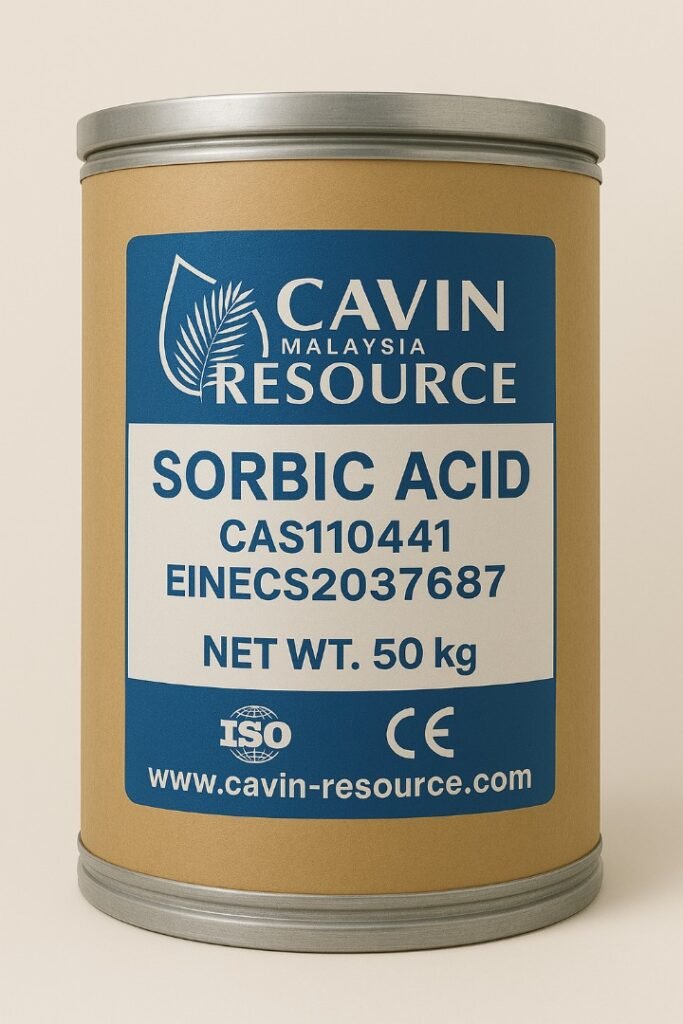
- Fiber drums
- Multi-layer paper bags
Bulk Packaging
- Large industrial containers
- Customized packaging solutions
Packaging selection depends on customer requirements and logistics considerations.
Storage Recommendations
Proper storage helps maintain product quality.
Recommended practices include:
- Store in a cool, dry area
- Protect from moisture
- Avoid direct sunlight
- Keep packaging sealed
- Follow supplier recommendations
Appropriate storage conditions help preserve shelf life and performance.
Factors Buyers Should Evaluate
When purchasing sorbic acid, buyers should review:
Product Purity
Verify assay values and quality specifications.
Supplier Reliability
Evaluate production capacity and supply consistency.
Documentation
Request:
- COA
- TDS
- SDS
Regulatory Compliance
Ensure suitability for intended applications.
Technical Support
Experienced suppliers can assist with product selection and formulation requirements. food preservative sorbic acid
Sorbic Acid Applications Influenced by Specifications
Different applications may emphasize specific quality characteristics.
Food Manufacturing
Focuses on:
- Reinheit
- Food-grade compliance
- Regulatory documentation
Beverage Production
May prioritize dissolution and formulation performance.
Pharmaceutical Applications
Require strict quality standards and documentation.
Cosmetic Manufacturing
Often requires additional quality and regulatory evaluations. sorbic acid purity
Frequently Asked Questions
What is the molecular formula of sorbic acid?
The molecular formula is C₆H₈O₂.
What is the purity of food-grade sorbic acid?
Food-grade material is commonly supplied at 99% purity or higher. food grade sorbic acid specifications
Is sorbic acid soluble in water?
Sorbic acid has limited water solubility compared to potassium sorbate.
What documents should suppliers provide?
Buyers typically request a COA, TDS, SDS, and regulatory compliance documentation.
Why are sorbic acid specifications important?
Specifications help ensure product quality, consistency, safety, and suitability for intended applications.
Conclusion
Understanding sorbic acid properties, specifications, and chemical characteristics is essential for manufacturers, importers, and procurement professionals. From purity and physical appearance to regulatory compliance and packaging requirements, these specifications help determine product quality and application suitability.
Whether used in food preservation, beverages, pharmaceuticals, cosmetics, or animal feed, selecting sorbic acid that meets appropriate technical standards can support product performance, regulatory compliance, and long-term supply reliability. sorbic acid food additive
 English
 Français
 Português
 Deutsch (Sie)
 Español
 Türkçe
 简体中文
简体中文 Nederlands
 Svenska
 Tiếng Việt
 Afrikaans
 Čeština
 Bahasa Indonesia
 Irish
Irish Suomi
Suomi עִבְרִית
 Luxembourgish
 Latin
Latin Bahasa Melayu
 فارسی
فارسی Norsk bokmål
 ไทย
ไทย Cymraeg
0 Kommentare