

Dipicolinsäure - Hochreine Verbindung auf Pyridinbasis
Der ursprüngliche Preis war: $2,100.00.$2,000.00Der aktuelle Preis ist: $2,000.00.
Bulk Buy Dipicolinic Acid (DPA), or pyridine-2,6-dicarboxylic acid, is a white crystalline organic compound known for its role in bacterial spore resistance and stability. Widely used in biochemical research, metal chelation, Polymersynthese, und UV-curable resins, Cavin Resource offers high-purity Dipicolinic Acid in bulk, ready for global B2B distribution with compliance documentation and fast shipping. acid wholesale distributors
DPA acid wholesale distributors
Dipicolinic Acid (DPA), auch bekannt als pyridine-2,6-dicarboxylic acid, ist ein heterocyclic dicarboxylic acid derived from the oxidation of pyridine derivatives. With the chemical formula C₇H₅NO₄, it appears as a white to off-white crystalline powder and is sparingly soluble in water. It naturally occurs in bacterial endospores, contributing to their high heat resistance and dormancy.
In industrial and research applications, Dipicolinic Acid is used as a chelating agent, particularly for lanthanide and transition metals, and in high-performance resin systems. It is also valuable in UV-curable polymers, Beschichtungen, und fluorescence spectroscopy. Biochemists use DPA in assays to detect endospore presence, while manufacturers use it in stabilizers and high-durability materials.
Cavin Ressource liefert DPA with consistent purity levels, technical documentation (COA, MSDS), and customizable packaging for industrial, research, and commercial needs.
⚙️ Produktionsverfahren
Oxidation of Lutidine Derivatives
2,6-dimethylpyridine (lutidine) is oxidized using oxidizing agents like potassium permanganate oder nitric acid.
The resulting compound is purified through crystallization und drying processes to ensure high purity levels.
🏭 Anwendungen und Anwendungsfälle in der Industrie
🔬 Biochemical & Microbiological Research
Marker for bacterial endospore detection
Verwendet in fluorescence spectroscopy und genomic assays
⚗️ Metal Chelation & Complexation
Binds efficiently with rare earth und transition metals
Verwendet in metal separation and purification
🏭 Polymer & Coatings Industry
Bauteil in UV-curable resins, thermosets, und adhesives
Verbessert thermal resistance und structural integrity
🧪 Pharmaceutical Intermediates
Vorläufer in API synthesis und fine chemicals
Used in experimental drug delivery systems
✅ Benefits of Dipicolinic Acid
✅ Key marker in bacterial spore detection
✅ Excellent chelating properties for rare earth metals
✅ Used in UV-resistant polymers and coatings
✅ High thermal and chemical stability
✅ Verfügbar in bulk quantities for R&D and manufacturing
✅ Supplied with global compliance certifications
📦 Verpackungs-Optionen
25 kg fiber drums with liner
500 g – 1 kg laboratory-grade pouches (on request)
Custom packaging for research and industrial clients
Enthält COA, SDS, TDS
❓ Häufig gestellte Fragen (FAQs)
1. What is Dipicolinic Acid mainly used for?
Antwort: DPA is widely used in bacterial endospore research, chelating metal ions, und Polymersynthese for coatings and resins.
2. Is DPA naturally occurring?
Antwort: Yes, it naturally occurs in bacterial spores, contributing to their resistance and dormancy properties.
3. Can Dipicolinic Acid be used in pharmaceutical production?
Antwort: Yes, it is a valuable intermediate in the production of specialty and experimental pharmaceutical compounds.
4. What industries benefit most from DPA use?
Antwort: Die biotech, Beschichtungen, polymer, und rare earth processing industries are the primary users of Dipicolinic Acid.
📚 Glaubwürdige Quellen für SEO & Referenz
Zusätzliche Informationen
| Produktname | Dipicolinic Acid (Pyridine-2,6-dicarboxylic acid) |
|---|---|
| CAS-Nummer | 499-83-2 |
| Molekulare Formel | C₇H₅NO₄ |
| Erscheinungsbild | White crystalline powder |
| Reinheit | ≥ 98% |
| Löslichkeit | Sparingly soluble in water |
| Melting Point | 235–240°C |
| HS-Code | 29333990 |
| pH-Wert | 2.5–3.5 (1% solution) |
| Verpackung | 25 kg drums / 1 kg lab packs |
| Haltbarkeitsdauer | 24 months |
| Anwendungen | Biochemical, polymers, UV resins, chelation |
| Einhaltung der Vorschriften | ISO Certified, REACH, SDS Available |
| Herkunft | Malaysia / Export-Ready Globally |
Ähnliche Produkte
-
Verkauf!

Erdnuss-Erdnussöl - Cavin Resources Malaysia
Der ursprüngliche Preis war: $1,050.00.$1,000.00Der aktuelle Preis ist: $1,000.00. -
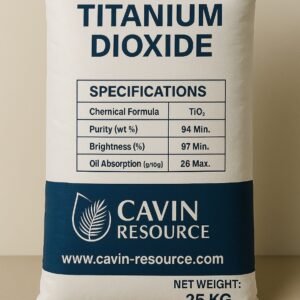
Titanium Dioxide (TiO₂) – High-Purity White Pigment
$1,400.00 -
Verkauf!
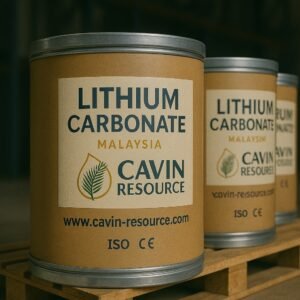
Lithiumcarbonat - Hochreines Li₂CO₃
Der ursprüngliche Preis war: $3,500.00.$3,400.00Der aktuelle Preis ist: $3,400.00. -
Verkauf!
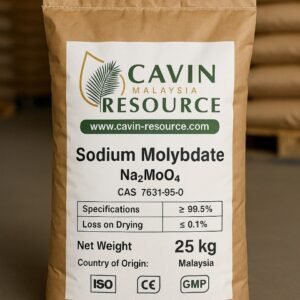
Natriummolybdat - Hochreines Molybdän
Der ursprüngliche Preis war: $19,000.00.$18,000.00Der aktuelle Preis ist: $18,000.00.

 English
 Français
 Português
 Deutsch (Sie)
 Español
 Türkçe
 简体中文
简体中文 Nederlands
 Svenska
 Tiếng Việt
 Afrikaans
 Čeština
 Bahasa Indonesia
 Irish
Irish Suomi
Suomi עִבְרִית
 Luxembourgish
 Latin
Latin Bahasa Melayu
 فارسی
فارسی Norsk bokmål
 ไทย
ไทย Cymraeg
Bewertungen
Es sind noch keine Bewertungen vorhanden.