

Acetone Uses. Acetone is one of the most important industrial solvents used in modern manufacturing. Known for its exceptional cleaning power, rapid evaporation rate, and versatility, acetone is widely used in pharmaceuticals, paints and coatings, plastics manufacturing, adhesives, electronics, and laboratory operations.
As industries continue to demand high-performance solvents, acetone remains a preferred choice because of its effectiveness, affordability, and compatibility with a wide range of industrial processes.
At Cavin Resource, we supply high-purity acetone for industrial, commercial, and manufacturing applications, helping businesses maintain product quality and operational efficiency through reliable chemical sourcing.
What is Acetone and Acetone Uses ?
Aceton, also known as propanone or dimethyl ketone, is a colorless, volatile, and highly flammable organic solvent with the molecular formula C₃H₆O.
It is the simplest ketone and is recognized worldwide as one of the most versatile solvents available for industrial applications.
Due to its strong solvency characteristics, acetone can dissolve oils, greases, resins, waxes, adhesives, and numerous organic compounds. Its ability to evaporate quickly without leaving significant residue makes it particularly valuable in manufacturing and cleaning operations.
Acetone occurs naturally in the environment and is also produced commercially on a large scale to support industrial demand.
Chemical and Physical Properties of Acetone
Understanding acetone’s physical and chemical properties helps explain why it is so widely used across industries.
| Eigentum | Value |
|---|---|
| Chemischer Name | Aceton |
| IUPAC Name | Propanone |
| Molekulare Formel | C₃H₆O |
| Molecular Weight | 58.08 g/mol |
| CAS-Nummer | 67-64-1 |
| Erscheinungsbild | Clear, Colorless Liquid |
| Geruch | Mild Sweet Odor |
| Siedepunkt | 56°C |
| Melting Point | -95°C |
| Dichte | 0.79 g/cm³ |
| Löslichkeit | Completely Miscible with Water |
These properties make acetone particularly effective as a cleaning agent, processing solvent, and chemical intermediate.
How Is Acetone Manufactured?
Commercial acetone production is primarily achieved through the Cumene Process, which simultaneously produces phenol and acetone.
The process typically involves:
Step 1: Cumene Production
Benzene reacts with propylene to form cumene.
Step 2: Oxidation
Cumene is oxidized to produce cumene hydroperoxide.
Step 3: Cleavage
The hydroperoxide is broken down into phenol and acetone.
This method is highly efficient and accounts for most of the world’s acetone production.
Industrial Uses of Acetone
One of the reasons acetone remains in high demand is its versatility across numerous industries.
1. Paints and Coatings Industry
Acetone Uses in paint formulations, coatings, varnishes, and lacquers.
Benefits include:
- Faster drying times
- Improved application performance
- Enhanced surface preparation
- Effective equipment cleaning
2. Pharmaceutical Manufacturing
The pharmaceutical sector uses acetone extensively during chemical synthesis and purification processes.
Acetone assists with:
- Active pharmaceutical ingredient production
- Drug formulation processes
- Equipment cleaning
- Laboratory operations
3. Plastics and Polymer Manufacturing
Acetone serves as both a solvent and chemical intermediate in the production of:
- Polycarbonate plastics
- Acrylic sheets
- Engineering polymers
- Synthetic fibers
4. Adhesives and Sealants
Many industrial adhesives use acetone to improve viscosity control and application consistency.
Manufacturers value acetone because it helps create uniform formulations with predictable performance.
5. Electronics Manufacturing
Electronics manufacturers use acetone to clean circuit boards, remove contaminants, and prepare surfaces for assembly.
Its rapid evaporation minimizes residue and contamination risks. Acetone Uses
6. Laboratory Applications
Acetone is a staple chemical in research laboratories for:
- Cleaning laboratory equipment
- Sample preparation
- Chemical analysis
- Surface degreasing
Advantages of Using Acetone in Industrial Processes
Excellent Solvent Performance
Acetone dissolves many substances that other solvents struggle to remove.
Rapid Evaporation
Fast drying reduces production downtime and increases operational efficiency.
Cost-Effective Solution
Compared with many specialty solvents, acetone offers excellent performance at a competitive cost.
Water Compatibility
Its complete miscibility with water increases flexibility across multiple industrial applications.
Widely Available
Global production and distribution networks ensure reliable availability for manufacturers. Acetone Uses
Acetone Safety Precautions
Although acetone is widely used, safe handling practices are essential.
Recommended precautions include:
- Wear chemical-resistant gloves
- Use safety goggles and protective clothing
- Ensure adequate workplace ventilation
- Avoid inhalation of concentrated vapors
- Keep away from sparks, flames, and ignition sources
- Follow local chemical safety regulations
Companies should always consult the relevant Safety Data Sheet (SDS) before handling acetone.
Storage and Handling Guidelines
Proper storage helps maintain product quality and workplace safety.
Best practices include:
- Store in tightly sealed containers
- Keep in a cool, dry, well-ventilated area
- Protect from direct sunlight
- Separate from incompatible chemicals
- Use approved flammable liquid storage systems
Routine inspections should be conducted to ensure compliance and product integrity. Acetone Uses
Why Businesses Choose Cavin Resource as Their Acetone Supplier
Selecting a reliable chemical supplier is critical for maintaining consistent production quality and operational efficiency.
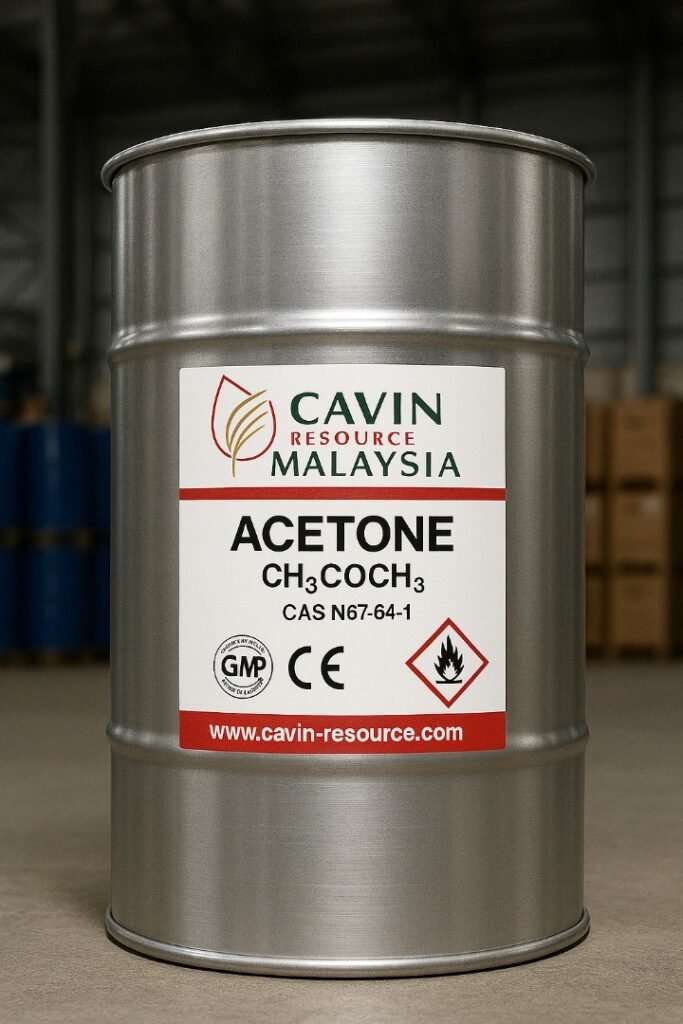
Cavin Resource supplies high-purity acetone for industrial applications across multiple sectors including manufacturing, pharmaceuticals, coatings, plastics, and laboratory operations. Acetone Uses
Businesses choose Cavin Resource because of:
Konstante Produktqualität
Every shipment is supplied according to established quality standards and documentation requirements.
Zuverlässige Großmengenversorgung
Support for small, medium, and large-volume industrial orders.
Technische Dokumentation
Availability of SDS, COA, and technical product information.
Logistics Support
Efficient delivery solutions designed to support industrial supply chains. Acetone Uses
Customer-Focused Service
Responsive support for procurement teams, distributors, and industrial buyers.
Whether you require acetone for manufacturing, processing, cleaning, or formulation purposes, Cavin Resource is committed to delivering dependable chemical supply solutions.
Environmental Considerations
Responsible acetone handling includes proper storage, transportation, use, and disposal practices.
Industrial users should:
- Follow local environmental regulations
- Minimize unnecessary solvent emissions
- Implement spill prevention procedures
- Train personnel in emergency response measures
Sustainable chemical management contributes to safer workplaces and environmental protection. Acetone Uses
Frequently Asked Questions About Acetone
What is acetone used for?
Acetone is used as a solvent in paints, coatings, pharmaceuticals, plastics manufacturing, electronics cleaning, adhesives, and laboratory applications.
What is the chemical formula of acetone?
The molecular formula of acetone is C₃H₆O.
Is acetone flammable?
Yes. Acetone is highly flammable and should be kept away from heat, sparks, and open flames.
What industries use acetone?
Industries that commonly use acetone include pharmaceuticals, chemicals, coatings, plastics, electronics, automotive manufacturing, and research laboratories.
How is acetone manufactured?
Most commercial acetone is produced through the Cumene Process, which also produces phenol. Acetone Uses
Is acetone soluble in water?
Yes. Acetone is completely miscible with water.
What is industrial-grade acetone?
Industrial-grade acetone is formulated for manufacturing, processing, cleaning, and chemical production applications.
Can acetone dissolve plastic?
Acetone can dissolve or soften certain plastics, especially acrylic materials and some thermoplastics.
What are the safety precautions for handling acetone?
Users should wear PPE, maintain ventilation, avoid ignition sources, and follow SDS recommendations.
Why is acetone widely used as a solvent?
Acetone offers excellent solvency, rapid evaporation, affordability, and compatibility with a wide variety of industrial processes.
Is acetone harmful to the environment?
Large releases may impact air and water quality. Proper handling and disposal practices should always be followed.
Can acetone be used as a cleaning solvent?
Yes. Acetone is widely used for removing oils, grease, adhesives, resins, and contaminants from industrial surfaces.
What are the physical properties of acetone?
Acetone is a clear, colorless liquid with a boiling point of 56°C, a molecular weight of 58.08 g/mol, and complete water miscibility.
How should acetone be stored?
Store acetone in sealed containers in cool, dry, well-ventilated areas away from ignition sources.
Why choose Cavin Resource for acetone supply?
Cavin Resource provides high-quality acetone, technical documentation, reliable logistics support, and bulk supply solutions tailored to industrial requirements.
References
For additional technical and regulatory information regarding acetone, consult:
- Cavin Resource Product Information
- PubChem Chemical Database
- Occupational Safety and Health Resources
- National Institute for Occupational Safety and Health (NIOSH)
- Europäische Chemikalienagentur (ECHA)
Request a Quote for Industrial Acetone
Looking for a trusted acetone supplier?
Cavin Resource supplies high-purity acetone for industrial, commercial, and manufacturing applications. Contact our team today to request pricing, technical specifications, packaging options, and bulk supply information.
 English
 Français
 Português
 Deutsch (Sie)
 Español
 Türkçe
 简体中文
简体中文 Nederlands
 Svenska
 Tiếng Việt
 Afrikaans
 Čeština
 Bahasa Indonesia
 Irish
Irish Suomi
Suomi עִבְרִית
 Luxembourgish
 Latin
Latin Bahasa Melayu
 فارسی
فارسی Norsk bokmål
 ไทย
ไทย Cymraeg
 Italiano
0 Kommentare